The Wright Brothers and Twelve Seconds at Kitty Hawk
By Tom Brennan · Published · 7 min read
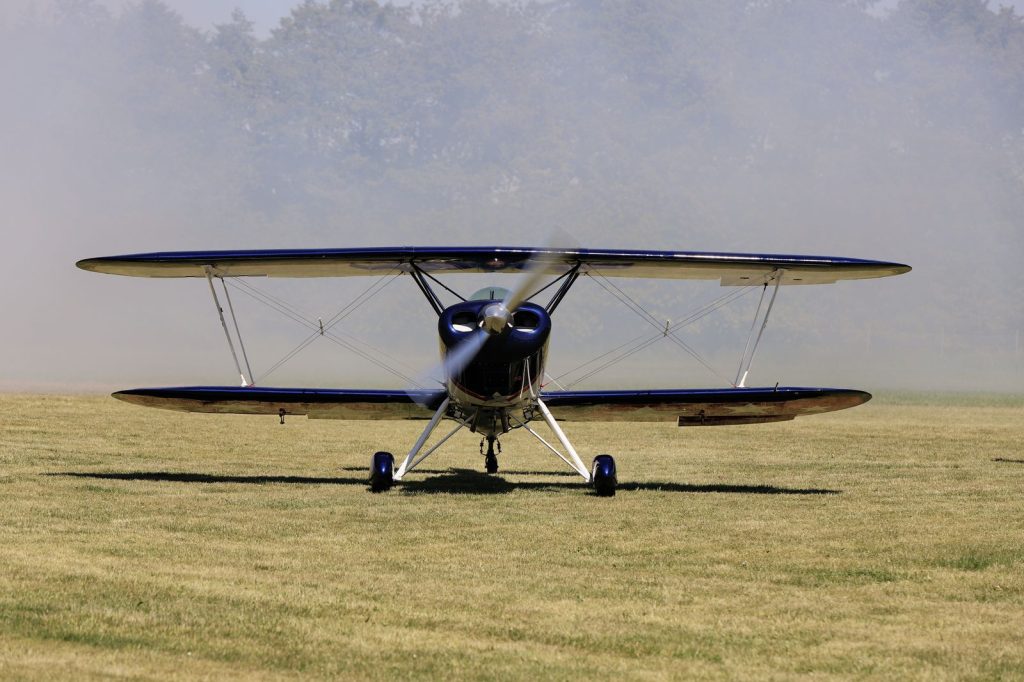
The first flight on December 17, 1903, covered 120 feet in 12 seconds. That distance is shorter than the wingspan of a modern jumbo jet, and the whole trip lasted only a few breaths. Yet the machine that made it is one of the most famous objects in American history.
Orville and Wilbur Wright did not stumble into that moment. They built it from a bicycle shop, a homemade wind tunnel, a new way of thinking about propellers and an engine finished in six weeks. Here are the pieces, in the order they fell into place.
Two Brothers, No Diplomas
Wilbur was born on April 16, 1867, in Millville, Indiana, and Orville on August 19, 1871, in Dayton, Ohio. Their father, Milton Wright, was a clergyman and bishop in the Church of the United Brethren in Christ, and their mother was Susan Catherine Koerner Wright. Their sister Katharine was a schoolteacher, and she would later play a part in their story.
Neither brother received a high school diploma at the time. Wilbur completed four years, but the family’s 1884 move to Dayton kept him from graduating, and the school awarded the diploma after his death, on April 16, 1994. Orville left school after his junior year in 1889 to start a printing business. In December 1892, the brothers opened a bicycle repair and sales shop, which later became the Wright Cycle Company, and they began making their own brand in 1896.
From Bicycles to Kites
The brothers dated their serious interest in flying to the death of the German glider pioneer Otto Lilienthal in August 1896. In May 1899, Wilbur wrote to the Smithsonian for information on the subject, and their experiments began that year. On July 27, 1899, they built and flew a biplane kite with a five-foot wingspan that used wing warping, a twisting of the wings, for control from side to side.
The bicycle trade was good training. It had taught them about lightweight frames, chains and gears, and the shop gave them a place to build things.
Kitty Hawk, Chosen on Purpose
From 1900 through 1902, the brothers tested gliders at Kitty Hawk, on North Carolina’s Outer Banks. They picked the spot for three reasons: regular breezes, soft sandy landings and Weather Bureau data that showed steady winds. The 1900 trip lasted only a few days in early autumn, and in 1901 they made dozens of glides in July and August that covered between 50 and 400 feet.
The 1902 season was much larger. They made more than a thousand glides from September 20 into late October, and the longest lasted 26 seconds and covered more than 600 feet. That year’s glider also carried a vertical rudder at the rear, which they later made movable. The powered flights of 1903 took off from the nearby sand hills of Kill Devil Hills, about four miles south of the village.
The Wind Tunnel and the Propeller
In 1901, the brothers built a six-foot wind tunnel in their Dayton shop and used it to test about 200 scale-model wing shapes. It was an unusual tool for a bicycle shop. It meant they could test ideas on small models before building anything large enough to carry a person.
They also concluded that an aeronautical propeller is essentially a wing rotating in a vertical plane. Wilbur’s March 1903 notebook recorded the efficiency of their prototype propeller at 66 percent. The finished Flyer carried two pusher propellers, each about 8 feet 6 inches long, behind the wings.
An Engine in Six Weeks
Their shop mechanic, Charlie Taylor, built the engine in six weeks, working closely with the brothers. It was a water-cooled four-cylinder motor with a cast aluminum body, rated at 12 horsepower and weighing about 180 pounds. The finished Flyer weighed 605 pounds empty, and its wingspan measured 40 feet 4 inches.
The machine was a canard biplane, which means its small horizontal surface sat in front of the main wings. The engine turned the two propellers through a sprocket-and-chain transmission. It was 21 feet 1 inch long and 9 feet 4 inches high, with a maximum weight of about 750 pounds, and it had no wheels, only skids. It took off from a 60-foot launching rail.
Thursday, December 17, 1903
The brothers tossed a coin on December 14 to see who would make the first attempt. Wilbur won, but his try ended after about 105 feet. That left the first successful flight to Orville three days later, and five people watched the flights. The four flights that morning went like this:
- Flight 1: Orville, 12 seconds, 120 feet.
- Flight 2: 175 feet in 12 seconds, with the brothers alternating at the controls.
- Flight 3: 200 feet in 15 seconds.
- Flight 4: Wilbur, 59 seconds, 852 feet over the ground.
A hard landing broke the front elevator supports after the fourth flight, and a heavy gust minutes later tumbled the Flyer end over end. It was badly damaged and never flew again. The famous photograph of the first takeoff was taken by John T. Daniels of the nearby lifesaving station, using the brothers’ camera.
From Huffman Prairie to Fort Myer
The brothers kept going. In 1904 and 1905, they flew at Huffman Prairie, a field near Dayton, and in October 1905, Wilbur flew about 24 miles in just under 40 minutes, ending only when the fuel ran out. A patent for their method of controlling a flying machine, which focused on lateral control rather than powered flight itself, was granted on May 22, 1906.
Public demonstrations came in 1908. On May 14, Charlie Furnas, a Dayton mechanic, became the first passenger on a fixed-wing aircraft. Wilbur began flying in France on August 8, and Orville began at Fort Myer, Virginia, on September 3.
On September 17, 1908, a propeller split and the Flyer went out of control at about 100 feet. Lieutenant Thomas Selfridge, riding as an observer, died that evening and became the first airplane crash fatality. Orville suffered a broken left leg and four broken ribs, and Katharine came to Virginia to stay through his seven-week hospitalization. She also helped negotiate a one-year extension of the Army contract.
Edith Berg became the first American woman passenger, flying with Wilbur on October 7, 1908, and Katharine herself flew with him on March 17, 1909.
The Army accepted a Wright airplane in July 1909, after flights at Fort Myer that met the requirements: two people aboard, an hour aloft and an average speed of at least 40 miles per hour. On October 4, 1909, Wilbur flew from Governors Island up the Hudson River to Grant’s Tomb and back, in view of about a million people. He carried a canoe under the airplane as a flotation device in case he had to ditch.
The brothers formed the Wright Company on November 22, 1909. They sold their patents to it for $100,000, received one-third of the shares in a $1 million stock issue and took a 10 percent royalty on each airplane sold. Wilbur served as president and Orville as vice president, with the factory in Dayton, a flying school at Huffman Prairie and headquarters in New York City.
Wilbur died of typhoid fever on May 30, 1912. Orville made his last flight as a pilot on May 13, 1918, in a 1911 Model B, and he lived until January 30, 1948.
What Happened to the Flyer
The wrecked 1903 Flyer had a long journey of its own. The Wrights crated it and shipped it to Dayton, where it sat in a shed for more than a decade. In 1913, a flood submerged the crates in water and mud for eleven days, and Orville repaired and reassembled it in 1916 for an exhibit at MIT.
A long dispute arose between Orville and the Smithsonian, which had displayed an earlier machine built by Samuel Langley as the first craft capable of manned powered flight. That claim rested on 1914 tests of the machine after the Curtiss company had heavily modified it. In 1928, Orville lent the Flyer to the Science Museum in London instead of the Smithsonian, and it stayed there through World War II.
In 1942, the Smithsonian published a list of the modifications and retracted its misleading statements. The Flyer returned to the United States in 1948. After Orville’s death, the Smithsonian acquired it from his estate, for a payment of $1 according to one account, and displayed it on December 17, 1948, exactly 45 years after the flights.