Early Presidents: Surprising Facts From Washington to TR
By Tom Brennan · Published · 7 min read
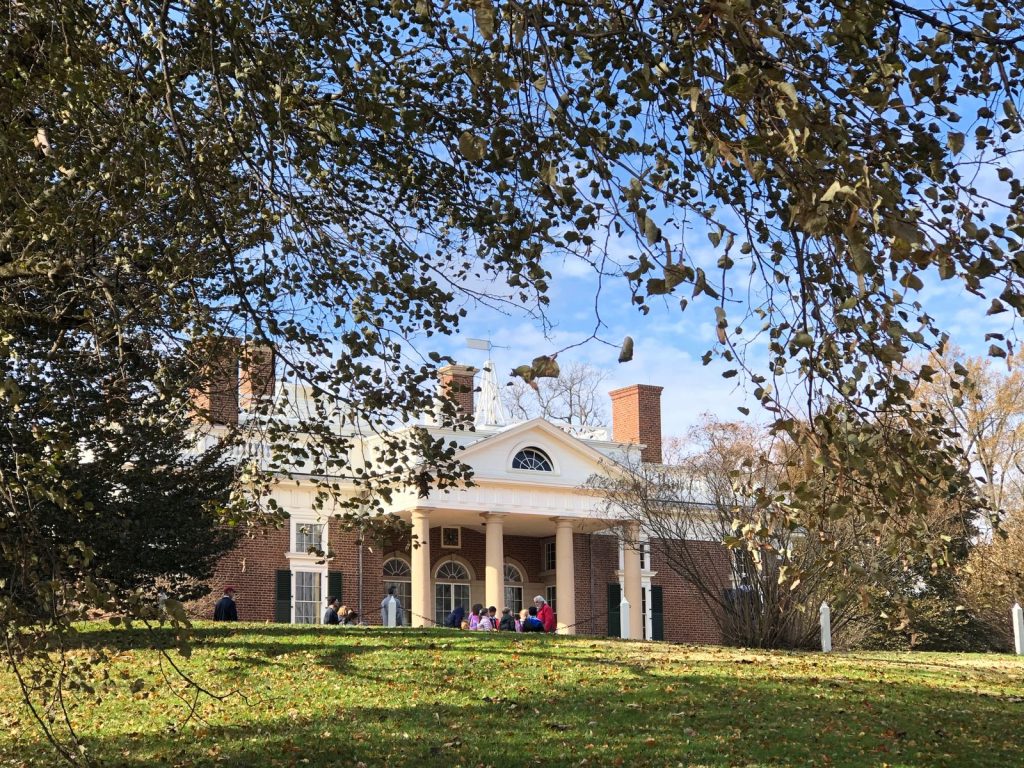
On July 4, 1826, the fiftieth anniversary of the Declaration of Independence, two former presidents died within hours of each other. Thomas Jefferson was 83 and died at Monticello, his home in Virginia. John Adams was 90 and died in Quincy, Massachusetts. His reported last words were “Thomas Jefferson survives,” spoken without knowing that his old friend and rival had already gone.
Five years later, James Monroe died in New York City on the same date, which made him the third president to die on Independence Day. A coincidence like that is only one of the odd turns in the first century of the office. The stories below run from Washington to Theodore Roosevelt, and they begin with the man who had to invent most of the job.
Washington Wrote the Pattern as He Went
George Washington was elected unanimously by the Electoral College in 1789, and again in 1792. He took the oath of office on April 30, 1789, at Federal Hall in New York City. Nobody had a script for what came next, so small choices became traditions, including the plain address “Mr. President,” which won out over grander titles that were debated in the Senate.
He stepped away after two terms, and later presidents treated that choice as a custom. His Farewell Address was never delivered as a speech. It reached the public on September 19, 1796, when David Claypoole’s American Daily Advertiser printed it.
Washington died on December 14, 1799, at the age of 67. Modern medical writers think the cause was severe epiglottitis, a swelling of the throat. His doctors tried bloodletting, and by one common estimate they drew about five pints in all.
From the Unfinished Mansion to the Monroe Doctrine
John Adams was the first president to live in the White House. He moved into the nearly finished President’s Mansion on November 1, 1800, only a few months before his term ended. His wife, Abigail Adams, served as his close adviser.
Jefferson was the next president, and his name is tied to one of the biggest land deals in history. The Louisiana Purchase treaty, dated April 30, 1803, set the price at $15 million. His love of books mattered, too, because after the Capitol burned in 1814 he sold his own library to Congress for $23,950.
That second collection had grown to nearly 6,500 volumes by 1814. He also founded the University of Virginia, which was chartered in 1819 and opened in 1825, and he served as its first rector.
James Monroe served from 1817 to 1825. As a young officer he was wounded at the Battle of Trenton, where a severed artery nearly killed him. In 1823 he announced American opposition to any European intervention in the Western Hemisphere, a statement later known as the Monroe Doctrine. He was re-elected virtually unopposed in 1820, though one elector from New Hampshire, William Plumer, cast a vote for John Quincy Adams instead.
The Longest Speech, the Shortest Term
William Henry Harrison took the oath on March 4, 1841, on a cold, wet day. He wore no overcoat or hat, and he delivered the longest inaugural address in American history, 8,445 words, which took nearly two hours to read. At 68, he was also the oldest man to take the oath up to that point, a record that stood until 1981. He had been born at Berkeley Plantation in Virginia and was known as Old Tippecanoe, and his 1840 campaign slogan was “Tippecanoe and Tyler Too.”
Nine days after falling ill, he died at 12:30 a.m. on April 4, 1841, exactly one month after his inauguration and 31 days into his term. For generations, the common theory blamed the weather on inauguration day. A 2014 study of the physician’s notes, by McHugh and Mackowiak, pointed in a different direction.
It noted that the White House water supply sat downstream of public sewage and concluded that he most likely died of septic shock from typhoid or a related fever. John Tyler took over as president that same day, and Harrison’s grandson Benjamin Harrison would later serve as the 23rd president, from 1889 to 1893.
Small Facts With Big Surprises
Every early president left behind a trivia answer or two. A short sampling:
- Martin Van Buren was born on December 5, 1782, in Kinderhook, New York, the first president born after the Declaration of Independence. He was raised speaking mainly Dutch, which makes him the only president whose first language was not English. Admirers called him the Little Magician, and “Old Kinderhook” was another nickname. He served as Andrew Jackson’s vice president from 1833 to 1837. A financial crisis known as the Panic of 1837 began a little over two months after he took office as president. He died on July 24, 1862, at his home in Kinderhook, aged 79.
- Abraham Lincoln is the only president to hold a patent. It was issued in 1849 for a flotation device to help riverboats move through shallow water. His formal schooling added up to less than a year in total. He stood 6 feet 4 inches tall, and he was admitted to the Illinois bar on September 9, 1836.
- Grover Cleveland married Frances Folsom on June 2, 1886, in the Blue Room of the White House. He remains the only president to marry there, and she was 21.
- Zachary Taylor reportedly had never cast a vote before 1848, the year he ran for president. He earned his nickname “Old Rough and Ready” in the Second Seminole War.
Theodore Roosevelt Takes the Office Young
Theodore Roosevelt was 42 when he took office on September 14, 1901, the youngest person ever to hold the presidency. William McKinley had been shot in Buffalo on September 6, and Roosevelt learned of his death on the fourteenth. A few weeks later, Roosevelt invited the educator Booker T. Washington to dinner at the White House, which prompted a bitter reaction across the segregated South. He later avoided issuing similar invitations.
His reach went beyond Washington, D.C. He placed about 230 million acres under public protection, including five national parks, 18 national monuments under the Antiquities Act of 1906 and 150 national forests. In November 1906 he made a trip of about two and a half weeks to Panama and Puerto Rico, usually described as the first journey outside the country by a sitting president. That same year, his efforts to end the Russo-Japanese War won him the Nobel Peace Prize. After leaving office he joined an expedition down Brazil’s River of Doubt, in the Amazon basin, and nearly died of illness.
A Secret Operation at Sea
In the summer of 1893, Grover Cleveland was in his second, nonconsecutive term, the first president to serve two terms with a gap. He was also hiding a medical problem. On July 1, surgeons removed part of his upper left jaw and hard palate aboard the yacht Oneida, owned by his friend Elias Cornelius Benedict and sailing off Long Island.
The operation was disguised as a vacation cruise. A cover story said that two bad teeth had been taken out, and a newspaper later printed details of the operation. The surgeon William Williams Keen published a detailed account in 1917.
The same man was an enthusiastic user of the veto. In his first term he used it 414 times, far more than any earlier president. Because Benjamin Harrison served between Cleveland’s two terms, Cleveland is counted twice, as the 22nd and 24th president.
Taylor’s Cherries and a 1991 Investigation
On July 4, 1850, Zachary Taylor attended a fundraising event at the Washington Monument. He reportedly ate large amounts of cherries and drank iced milk. He died at 10:35 p.m. on July 9, only 16 months into his term, and his army physician diagnosed cholera morbus, which was not Asiatic cholera.
Taylor was a career soldier whose army service ran from 1808 to 1849, about forty years.
Suspicions of poison persisted for generations. In 1991, a former university professor named Clara Rising persuaded Taylor’s closest living relative to agree to an exhumation. On June 17, 1991, the remains were moved to the Kentucky Chief Medical Examiner’s office for testing. Arsenic levels were several hundred times lower than would have been needed to poison him, and the analysts concluded he died of cholera morbus, or acute gastroenteritis.