The Gettysburg Address: Two Minutes That Lasted
By Tom Brennan · Published · 7 min read
By the time Abraham Lincoln stood up on November 19, 1863, the crowd in Gettysburg had already listened to a man speak for about two hours. Edward Everett’s oration ran to 13,607 words. Lincoln’s remarks lasted about two minutes and came to roughly 270 words, depending on which copy is counted.
The contrast is part of the story, but it is only part. Here are the questions people ask most often about that day, with the answers that the surviving evidence supports.
Why Was Lincoln There?
The Battle of Gettysburg was fought on July 1 to 3, 1863, and it ended in a Union victory. More than 3,000 Union soldiers were killed in the three days, and the two armies together suffered more than 50,000 casualties, counting the wounded and missing. Months later, a new cemetery for the Union dead was under construction on the edge of town.
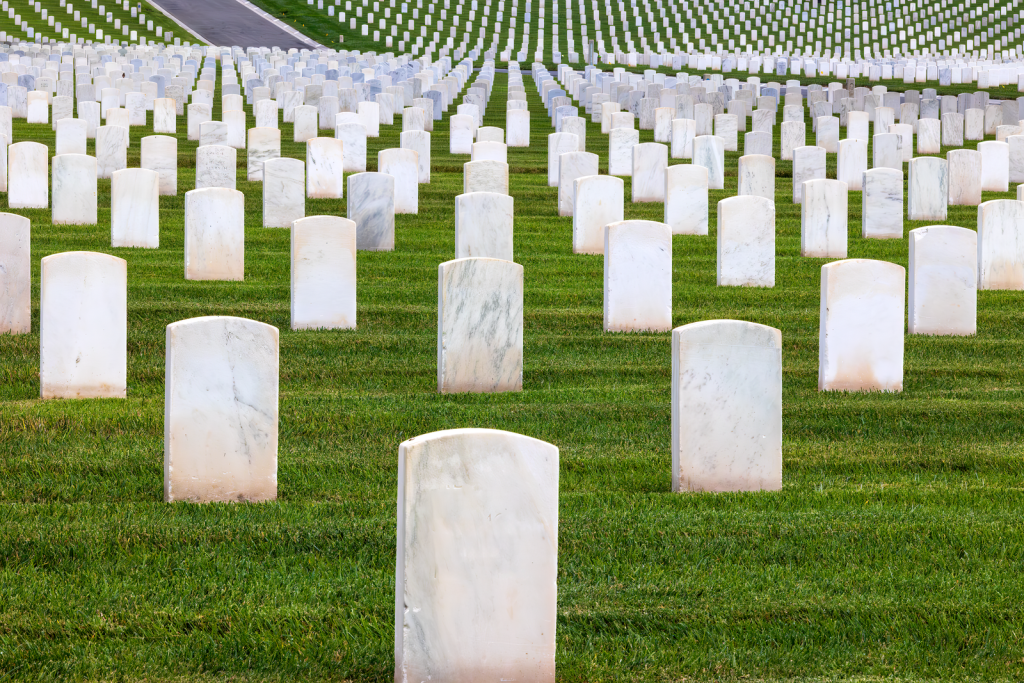
The ceremony on November 19 was the dedication of that burial ground, called the Soldiers’ National Cemetery. The graves were arranged in concentric rings around a central point where a flagpole stood, and a monument was proposed for the center. The cemetery is now known as Gettysburg National Cemetery, and the Soldiers’ National Monument occupies the middle.
Who Was the Main Speaker?
It was not Lincoln. David Wills, a member of the committee that planned the consecration, invited the president, and he asked that after Everett’s oration Lincoln formally set apart the grounds with “a few appropriate remarks.” About 15,000 people attended.
The day began with a procession that formed in the town square and moved to the cemetery, led by a military band, with Lincoln riding a gray horse at the front. Everett, described by one witness as the most finished orator of the day, gave a speech that was well received and neoclassical in style, with direct references to Marathon and Pericles. Lincoln followed him, and a hushed crowd came after.
Did He Write It on an Envelope?
No. The idea that Lincoln jotted the speech on an envelope on the train is a widely held misunderstanding. A historical marker says he wrote the address in Washington and revised it after he reached Gettysburg on the evening of November 18.
His secretary John Nicolay later wrote that Lincoln brought the first part in ink on Executive Mansion stationery and wrote the second page in pencil before the ceremony. That night, Lincoln stayed at Wills’s house, where a crowd gathered and he spoke briefly without notes. He then met with Secretary of State William Seward and went to sleep around midnight.
Which Copy Is the Real One?
Five manuscript copies are known, and they differ in small ways:
- Nicolay copy: kept at the Library of Congress and often called the first draft.
- Hay copy: also at the Library of Congress, and sometimes called the second draft. Scholars disagree about whether John Hay’s copy was written the morning of the address or after Lincoln returned to Washington.
- Everett copy: kept at the Illinois State Library in Springfield and displayed at the Abraham Lincoln Presidential Library and Museum. Lincoln gave it to Edward Everett in early 1864.
- Bancroft copy: now at Cornell University. Lincoln wrote it in February 1864 at the request of the historian George Bancroft, who planned to include it in a book, Autograph Leaves of Our Country’s Authors, to be sold at a sanitary fair in Baltimore.
- Bliss copy: made in March 1864 for Colonel Alexander Bliss, Bancroft’s stepson and the book’s publisher. It is signed and dated, it is regarded as the standard text, and it hangs in the Lincoln Room of the White House.
Everett’s copy was part of a collection that was sold to benefit stricken soldiers at New York’s Sanitary Commission Fair.
Even the version printed on the day was not exactly the same as any of these. Joseph L. Gilbert of the Associated Press transcribed the speech from his shorthand notes, and his dispatch differs from the drafted text in minor ways.
What Do the Words Say?
The speech opens with a reference to the Declaration of Independence, moves to the war then under way and ends with the line that government of the people, by the people, for the people shall not perish from the earth. In between comes a modest remark that the world would little note, nor long remember, what was said there. History proved the opposite.
The opening sentence speaks of a nation “conceived in Liberty” and “dedicated to the proposition that all men are created equal.” The phrase “four score and seven years ago” means 87 years, because a score is twenty, and counting back from 1863 lands on 1776.
The writer Garry Wills has linked the structure to the funeral oration of Pericles, which acknowledged ancestors, honored the dead and urged the living to carry on. Another historian, Matthew Pinsker, argues that the speech’s promise of “a new birth of freedom” drew on a July 1863 report in the New York Times that used the phrase “second birth of Freedom in America.”
The phrase “under God” is absent from the Nicolay and Hay drafts but appears in the Everett, Bancroft and Bliss copies. At least three reporters telegraphed it on the day, which suggests Lincoln said it aloud.
How Did the Crowd React?
Eyewitnesses left several impressions of the man himself. John Hay wrote that Lincoln’s face had a “ghastly color” and that he looked sad and mournful, almost haggard. Pennsylvania governor Andrew Curtin said Lincoln spoke in a voice that all the multitude heard, and one citation notes a pronounced Kentucky accent. Lincoln was likely in the early stage of a mild case of smallpox while he spoke.
On the applause, accounts conflict. One witness, Sarah Myers, recalled none at all. A later historian described it as delayed and scattered and no more than politely given. The day’s reports do not describe an obvious triumph.
Newspapers reacted differently too. The New York Times and the Springfield Republican printed the full text, and the Chicago Times criticized the speech. The Harrisburg paper then known as the Patriot & Union called it “silly remarks” that deserved “the veil of oblivion,” and it formally retracted that view in 2013, saying it regretted the error.
The Patriot & Union’s verdict is a reminder that the speech’s reputation grew over time rather than arriving at once.
Everett wrote to Lincoln the next day to say he wished he could flatter himself that he had come “as near to the central idea of the occasion, in two hours, as you did in two minutes.” Lincoln replied that he was glad the speech was not a total failure.
The Photograph in the Crowd
A photograph taken at the dedication shows Lincoln seated among the dignitaries, and it took decades to recognize him in it. The image was found among the Mathew Brady plates at the National Archives and is credited to the photographer David Bachrach. A researcher named Josephine Cobb identified Lincoln in it in 1952.
The caption places Ward Hill Lamon at Lincoln’s right. Another figure on the platform that day was Colonel W. Yates Selleck, a parade marshal, and the dignitaries sat there for hours through the program.
A Phrase That Traveled
The Bliss version is the one carved into the south wall of the Lincoln Memorial. Beyond the United States, the closing phrase about government of the people, by the people, for the people appears almost word for word in France’s constitution. It also inspired Sun Yat-sen’s Three Principles of the People and the preamble of Japan’s 1947 constitution.
Later speakers echoed the address too. John F. Kennedy referred to it in a 1963 speech at Gettysburg, and Martin Luther King Jr. opened his 1963 speech in Washington with a line that borrowed its cadence. Near the Taneytown Road entrance to the cemetery, the Lincoln Address Memorial and the Gettysburg Rostrum mark the speech, and a roadside marker was designated on December 12, 1947.