Apollo 11: The Night America Watched the Moon
By Tom Brennan · Published · 7 min read
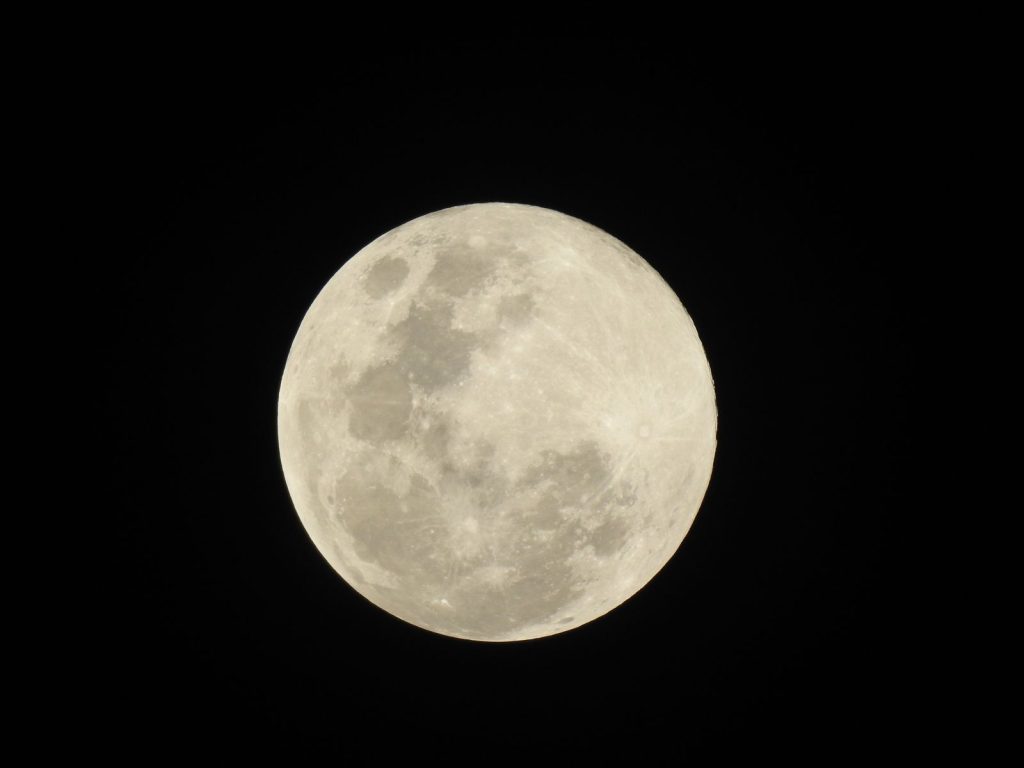
When the lunar module Eagle settled onto the Moon, its tanks held about 216 pounds of usable fuel. Controllers in Houston believed that meant roughly 25 seconds of margin, though an analysis after the flight put the real cushion closer to 50. Neil Armstrong had spent the final minutes of the descent studying the ground ahead, because the spot the computer was aiming for was littered with boulders.
That close call is one thread in a mission full of them. The flight also included a launch watched by crowds on beaches, a moonwalk lasting two and a half hours, a television picture patched together from tracking stations in two countries, and a quarantine that kept the crew apart from their families. What follows takes the mission in order, with every time given in Eastern daylight time.
Wednesday, July 16: Liftoff
A Saturn V rocket lifted off from Kennedy Space Center in Florida at 9:32 a.m. on July 16, 1969. An estimated one million spectators watched from highways and beaches around the launch site. Aboard were Neil Armstrong, Michael Collins and Buzz Aldrin, riding in the command module Columbia, with the lunar module Eagle carried along for the landing.
Collins designed the mission patch, which shows an eagle approaching the Moon with Earth hanging in the distance. Tom Wilson suggested the olive branch. NASA’s Robert Gilruth thought the eagle’s talons looked too warlike, so the branch was moved into them, and the crew left their own names off the design so that it would stand for everyone who had worked toward a lunar landing.
Sunday, July 20: Touching Down
Eagle separated from Columbia and began its descent, and at 4:17 p.m. it came to rest in the Sea of Tranquility. Partway down, the onboard computer flashed program alarms numbered 1201 and 1202, and the landing went ahead. Then Armstrong saw that the automatic guidance was carrying them toward a large crater, later identified as West crater, with a boulder field just north and east of it.
He took semi-automatic control and flew onward to look for smoother ground, and the extra flying is why fuel became a concern. Once the engine shut down, Armstrong radioed that Eagle had landed at Tranquility Base. A voice from Houston answered that the controllers had been holding their breath and could breathe again.
Sunday Night: The First Steps
The mission schedule called for a five-hour rest after landing. The crew skipped it and started preparing for the moonwalk early. Armstrong stepped onto the surface at about 10:56 p.m., roughly six and a half hours after touchdown, and said, “That’s one small step for man, one giant leap for mankind.”
Armstrong said he meant to say “for a man.” The “a” is hard to hear in the recording, and people have argued over it for decades without settling it. Aldrin followed nineteen minutes later and described the view as “magnificent desolation.”
Together they spent 2 hours, 31 minutes and 40 seconds outside. Their jobs included:
- Collecting samples, about 47.5 pounds of lunar material by the end.
- Setting up experiments, among them a seismometer for detecting moonquakes and a reflector for laser beams aimed from Earth.
- Photographing the site, with still cameras and a film camera that also recorded Armstrong’s descent.
- Taking a phone call, because President Richard Nixon spoke with them from the White House.
Why the Picture Looked That Way
The camera on Eagle did not produce a picture in the format American television sets could display. It sent a monochrome signal of 320 lines at 10 frames per second, a slow-scan format, and ground equipment had to convert it into the broadcast standard. Part of that conversion cost the picture some of its clarity, which is why the images have the ghostly, smeared look seen in so many replays.
Three tracking stations took turns handling the signal. The broadcast alternated at first between Goldstone, in California, and Honeysuckle Creek, near Canberra in Australia. The astronauts had started the moonwalk early, so the Moon was barely above the horizon in Australia.
A little under nine minutes into the broadcast it rose high enough for the 210-foot dish at Parkes, in New South Wales, and NASA stayed with Parkes for the rest of the two and a half hours, even though wind gusts above 60 miles per hour were hitting the telescope. An estimated 600 million people watched, roughly one in six people on Earth at the time.
The Man Who Stayed Behind
While the other two worked on the surface, Collins flew alone in Columbia. Each time the spacecraft passed behind the Moon, he lost radio contact with Earth for 48 minutes. It was often said that no one since Adam had known such solitude, but his own account did not match that description.
He reported feeling anticipation and satisfaction rather than loneliness, and he wrote that he considered his part as necessary as either of the other two. His role mattered because the whole plan depended on one person staying with the command module, the only part of the spacecraft that could carry all three men home. If Eagle could not rejoin Columbia, the lunar surface crew had no way back.
What They Left Behind
The crew placed a small collection of objects on the Moon, and several were tributes:
- An Apollo 1 mission patch, remembering the crew who died in a launch pad fire in 1967.
- Medals for two Soviet cosmonauts, Yuri Gagarin and Vladimir Komarov, who had also died.
- A gold replica of an olive branch, a symbol of peace.
- A small silicon disk carrying goodwill statements from the leaders of 73 countries.
- A plaque on the lunar module’s landing leg, signed by the three astronauts and President Nixon, saying they had come in peace for all mankind.
The flag did not stay upright for long. When Eagle launched from the surface, the blast of the ascent engine knocked it over, and Aldrin said he looked up just long enough to see it fall.
Home Again
Eagle lifted off the Moon at 1:54 p.m. on July 21 and rejoined Columbia in orbit. The command module splashed down in the Pacific at 12:50 p.m. on July 24, and the carrier USS Hornet picked up the crew. The whole flight lasted 8 days, 3 hours, 18 minutes and 35 seconds.
The astronauts then went into the Mobile Quarantine Facility aboard Hornet, a sealed unit meant to guard against unknown organisms from the Moon. They reached the Lunar Receiving Laboratory in Houston on July 28, and the quarantine ended on August 10.
On August 13 came parades in New York and Chicago, with an estimated six million people along the routes. That evening, in Los Angeles, a state dinner at the Century Plaza Hotel included presentation of the Presidential Medal of Freedom to each astronaut. On September 16 they addressed a joint session of Congress.
The Tapes Nobody Kept
The original slow-scan recordings of the moonwalk made at the ground stations were never saved in the way people expected. According to the team that investigated, the tapes were erased and reused by NASA in the early 1980s, during a shortage of data tape. The converted television broadcast had been widely recorded, so the raw backup was not considered important at the time.
Some of the story only came out years later. A search by retired NASA employees and contractors in the early 2000s did not turn up the lost reels, and NASA announced its own official search on August 16, 2006. Then, on July 16, 2009, NASA held a news conference at the Newseum in Washington, D.C., where the team presented its findings and released enhanced footage. A company called Lowry Digital restored the moonwalk video, finishing in late 2009 by one account.
Copies filled the gap. Videotapes and kinescope films of the converted broadcast survived, many of them rough, and Super 8 film shot at Honeysuckle Creek, mostly of a monitor, turned up in 2005. Raw recordings from the Australian feeds of Armstrong’s descent and first steps surfaced through researcher John Sarkissian, who showed them publicly in October 2010.
One more oddity belongs to the story. Three reels from a batch of 1,150 were bought at a government auction in 1976 for $218, and they sold in 2019 for $1.82 million. They were not the missing moonwalk tapes, and NASA said they held nothing it had not already preserved. Many Americans in 1969 saw the landing on a small, flickering set, and the sharper versions that followed came from patient work that began decades afterward.