Why Europeans Once Feared the Tomato
By Ellen Brooks · Published · 7 min read
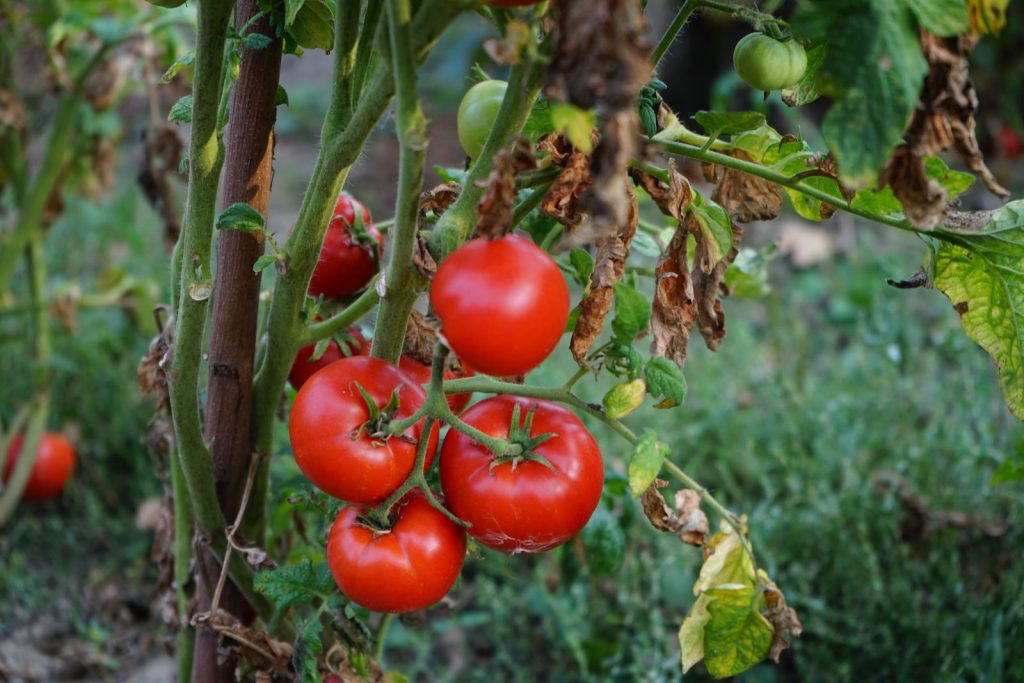
In 1597, the English herbalist John Gerard described the tomato plant as having a rank and stinking smell. His Herball was widely read, and a good deal of it was borrowed from earlier continental writers. His verdict on the tomato was repeated for a very long time.
That is the thread behind a famous piece of food history. The tomato reached Europe within a generation of the Spanish conquest of Mexico, yet in much of the continent it spent decades as a curiosity in flower gardens. This is a timeline of why, with a few popular legends checked along the way.
1521 and After: A New Fruit Crosses the Ocean
The Aztecs ate tomatoes and had a name for them, tomatl, which Spanish speakers turned into tomate and English speakers into tomato. After Hernán Cortés captured the Aztec capital of Tenochtitlan in 1521, Spanish ships began carrying Mexican crops back across the Atlantic. Conquistadors are thought to have brought tomato seeds to southern Europe in the early 1500s, and the plant was growing in European gardens by the 1540s.
The tomato itself is a New World plant. Its wild relatives grow in western South America, and people in the Americas had domesticated it long before any European saw it. That is why Europe had no old name or old recipe for it, and why the first descriptions read like reports on something strange.
Spain accepted the fruit sooner than most places. It was being eaten by the early 1600s, and a 1618 play by Lope de Vega mentions it. Italy had its own early champions, but much of northern Europe was slower. Britain, in particular, was slow to accept the fruit.
1544: Italy Names a Cousin
The earliest European literary mention is usually credited to the Italian botanist Pietro Andrea Mattioli, whose 1544 herbal described a new fruit like an eggplant. He said it was eaten cooked with salt, pepper and oil. In an edition of 1554, he called the fruits pomi d’oro, meaning “golden apples,” which may mean the first ones he saw were yellow.
The French called the fruit pomme d’amour, the love apple, and some herbals alluded to an aphrodisiac reputation. There is little evidence that the reputation changed anyone’s behavior. A 1677 English dictionary described the love apple as “a Spanish root of a colour near violet,” which was wrong on nearly every count.
Mattioli also grouped the plant with the nightshades, and that classification mattered. The nightshade family includes some of the most notorious plants in European folklore, such as these:
- Belladonna, also called deadly nightshade, long known as a poison.
- Mandrake, a plant tied to legends of witchcraft and love potions.
- Henbane and tobacco, both relatives with powerful chemistry.
The family also contains eggplant, potatoes and peppers, so it is not a family of villains. But a new plant with a nightshade look was easy to suspect, and the suspicion shaped how the fruit was used. A letter from 1548 describes a basket of tomatoes sent to the Medici court, suggesting early use as an ornament. Florence reportedly used tomatoes only as table decoration until the late 1600s or early 1700s.
1597: England Reads Gerard
English gardeners were growing tomatoes by the 1590s, and then came Gerard’s Herball. He called the whole plant rank and stinking, and later writers have pointed out that his book relied heavily on Rembert Dodoens and Charles de l’Écluse. His judgment did not come from experience with the fruit.
A seventeenth-century English translation of the French agricultural book Maison Rustique went further. It claimed that eating the fruit “provoketh loathing and vomiting.” Writers repeated these remarks, and in Britain and its American colonies the tomato was widely regarded as unfit for the table for many years.
Medical theory of the era added to the doubt. Many northern European herbalists worked within humoral theory, an old system that judged foods by their effect on the body’s balance, and under that thinking the tomato looked dangerous. Italy and Spain, where the fruit was accepted first, were also the places where cooks tried it first.
Meanwhile, elsewhere in Europe, outside Spain and Italy, tomatoes were grown mainly as ornamental plants. The reason reportedly given is the same one: their kinship with the nightshades led people to assume the worst.
A Slow Retreat of the Fear
The fear did not vanish all at once. It receded country by country, with Spain and Italy first and Britain last, and the documents give a rough map of how:
- 1554: The Flemish botanist Rembert Dodoens published a woodcut of the plant with a warning about eating it.
- 1673: The English naturalist John Ray listed the love apple among the Italian fruits that the English did not eat.
- 1690s: Antonio Latini used tomatoes in a Neapolitan palace kitchen.
- 1773: Vincenzo Corrado’s Il Cuoco Galante included a recipe for tomatoes in the Neapolitan style.
- 1784: A Spanish botanical work of that year, by José Quer y Martínez, described widespread tomato eating in Spain.
- 1797: The Encyclopaedia Britannica described the tomato as in daily use.
- 1837 to 1845: Recipes by Christian Isobel Johnstone and Eliza Acton showed tomatoes had become accepted in Britain.
The Pewter Plate Theory
A popular explanation says wealthy Europeans ate off pewter plates that contained a good deal of lead. The acidity of tomatoes, the story goes, drew lead out of the plate, and diners got sick and blamed the fruit. It is a tidy explanation, and it has been repeated for years.
It does not hold up well. One chemist who examined the claim called the amount of lead that acidic fruit could pull from pewter trivial. The same chemist suggested a simpler reason: the tomato’s small, glossy fruit resembled belladonna berries, and people drew the obvious conclusion. Either way, the motives are guesses, so it is safest to say that Europeans were wary and leave the rest open.
1710 and Beyond: Across the Atlantic
The earliest reference to tomato cultivation in what became the United States is from 1710, when an English writer named William Salmon saw them growing in South Carolina. Thomas Jefferson was growing them at Monticello by 1809, and he credited a Portuguese doctor in Williamsburg named Sequeyra with introducing the plant to Virginia as food. Jefferson’s own Notes on the State of Virginia, published in 1781, already lists tomatoes among the state’s garden produce. Colonial farmers grew tomatoes, though many did not know how to cook them.
Recipes began appearing in American periodicals around the 1820s, and by the 1830s tomato cookbooks had been published. Large-scale Italian immigration in the late 1800s and early 1900s helped bring the fruit to many more tables.
It is often said that Americans believed tomatoes were poisonous right up to the 1820s. That claim is disputed, since the belief was never widespread. Across the ocean, a notice in London’s The Times in 1820 described tomatoes as abundant in markets.
The Salem Courthouse Legend
The best-known American tomato story concerns Robert Gibbon Johnson of Salem, New Jersey. In the tale, he stood on the courthouse steps in 1820 and ate a basket of tomatoes before a crowd that expected him to die. The scene has been retold in books, museums and festivals.
There is no record of it. Historian Andrew F. Smith found no evidence that the event took place, and the story first appeared in a 1937 book by Joseph S. Sickler, long after the supposed date.
Later writers embellished it. Smith did find evidence that Johnson grew tomatoes, so he may have encouraged others to eat them, but the courthouse scene remains a legend.
Naples Gets the Last Word
The slow Italian embrace of the tomato eventually mattered more than anything the English said. A Neapolitan cookbook from 1692, by Antonio Latini, is often cited as an early printed source of tomato recipes. Italian herbals had described cooked tomatoes a century and a half earlier.
Notice how the labels changed. Latini’s tomato sauce was presented as Spanish in style, while Corrado’s recipe of 1773 needed no mention of Spain, a small sign that the fruit had begun to feel Italian.
Over the next two centuries, the tomato moved from curiosity to staple in Italian kitchens. The fruit that Gerard dismissed in 1597 would become central to Italian cooking, which makes his verdict one of the more famous misjudgments in the history of food.