Fruit or Vegetable? What Botany Says About Produce
By Ellen Brooks · Published · 7 min read
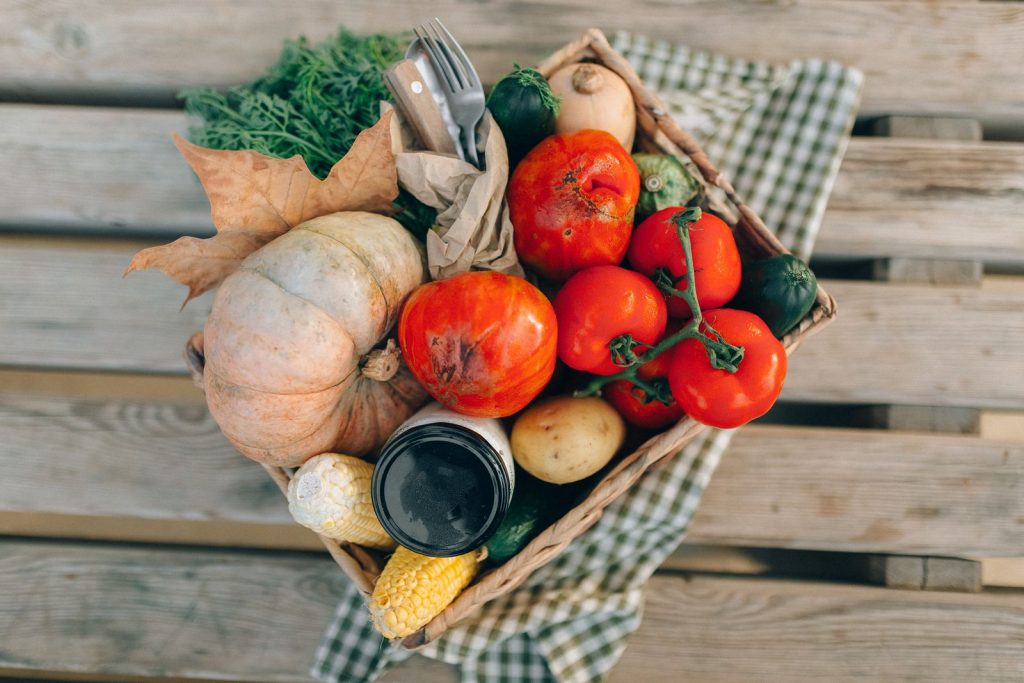
In 1893, the Supreme Court unanimously ruled that a tomato was a vegetable. The case was Nix v. Hedden, and the justices admitted in the same breath that botanists would call it a fruit. They were not confused, only answering a different question from the one botanists answer.
That gap between the kitchen and the laboratory has never closed. Cooks sort food by how it is served, and botanists sort it by how the plant grew it. Neither system is wrong, and the overlap produces some memorable arguments.
Two Rulebooks for One Plate
In botany, a fruit is the seed-bearing structure of a flowering plant, formed from the ovary after the flower has been pollinated. That definition is precise, and it applies to every flowering plant. In the plant’s own terms, a fruit is a way of protecting seeds and helping them travel. It does not have to be sweet, juicy or served at dessert, and many fruits are none of those things.
Vegetable, by contrast, is not a botanical term in the everyday sense. It is a culinary and cultural category, applied somewhat loosely, and it usually leaves out fruits, nuts and cereal grains. Roots, stems, leaves, flowers, fruits and seeds can all end up on the vegetable list if a cook treats them that way.
So the question “fruit or vegetable?” really has two answers. Botanically, tomatoes are fruits, and in a kitchen they are vegetables. Both statements can be true on the same day.
The Botanist’s Rule
If you ask whether a food came from a flower’s ovary and holds seeds, a surprising number of familiar vegetables qualify. A short list of botanical fruits that most people treat as vegetables looks like this:
- Tomatoes, eggplants and bell peppers, which are all berries in the botanical sense.
- Cucumbers, pumpkins and squash, members of the gourd family.
- Green beans, peas and peanuts, which come from legume pods.
- Okra pods and olives, which cooks serve in savory dishes but which are fruits all the same.
- Corn, whose kernels are a kind of fruit called a caryopsis.
Corn deserves a second look. In grains such as corn, rice and wheat, the fruit wall is thin and fused to the seed coat, so the edible grain is essentially a seed inside its own fruit. That is why a corn kernel feels like a single piece, not a fruit with something inside it.
What Counts as a Real Vegetable
Plenty of produce is vegetable from every angle. A carrot is a root. Celery is a leaf stalk, and asparagus is a young shoot.
Lettuce and spinach are leaves, and broccoli is mostly a cluster of flower buds. An onion is a bulb, built from swollen leaf bases.
Rhubarb belongs to this group too. The part people cook is the leaf stalk, not a fruit, although most cooks use it the way they use fruit, in pies and sauces. That detail matters in a courtroom story told below.
The practical lesson is that culinary vegetables are a mixed bag. They include roots, stems, leaves and flowers that are not fruits in any sense, together with fruits that a kitchen has simply decided to count as vegetables.
Berries That Are Not and Fruits That Surprise
Botany also has fun with the word berry. A true berry is a fleshy fruit that develops from the ovary of a single flower and does not split open.
By that definition, bananas, grapes, tomatoes, eggplants and peppers are berries. Avocados are usually described as berries too, though some botanists class them differently. Cucumbers and watermelons belong to a related type called a pepo.
Strawberries are not berries. The fleshy part of a strawberry grows from the receptacle, the base of the flower, not the ovary, which makes it an accessory fruit. Raspberries and blackberries are also not berries. Each is an aggregate fruit made of many tiny drupelets.
Pineapples and figs are multiple fruits, formed from a cluster of flowers whose fruitlets merge into a single mass. The same logic explains why a pineapple is not a single fruit but a merger of many. Botany is full of surprises like this, and most of them come from asking where each part of the plant began.
Even nuts are more complicated than they look. A true nut such as a hazelnut or an acorn is a type of fruit, while a peanut is the seed of a legume, and Brazil nuts and walnuts are not true botanical nuts at all.
Where the Kitchen Rule Bends
Cooks do not follow a written rule, but there is a common habit: fruit is sweet or tart and eaten raw or in desserts, while vegetables are savory and served with the main course. The habit works most of the time. It also has fun exceptions that show how loose the category really is.
Pumpkin is a botanical fruit that cooks treat as a vegetable, and yet its best-known role is in a sweet pie. Sweet potato pie does the same trick with a root. Carrot cake puts a root vegetable in a dessert, and rhubarb, a leaf stalk, gets baked with sugar until it behaves like a fruit.
Even the Supreme Court’s reasoning in 1893 rested on this habit. The justices pointed to how tomatoes are served and not to how they grow, and they described witnesses who said that the words had no special meaning in the produce trade beyond their everyday ones.
The Tomato Goes to the Supreme Court
The tomato case began with a tariff. Under the Tariff Act of 1883, imported vegetables were taxed and imported fruit was not. The New York firm John Nix & Co. argued that tomatoes were fruit and sued Edward L. Hedden, the Collector of the Port of New York, to recover the duties it had paid under protest.
Reports of the case describe a 10 percent import tax on vegetables. The lower court ruled for Hedden, and the Supreme Court agreed in a unanimous decision written by Justice Horace Gray. The decision came on May 10, 1893.
The Court did not deny the botany. It held that the tariff law used the ordinary meaning of “fruit” and “vegetable,” not the technical one, and that dictionaries served only as aids to understanding. Tomatoes, the Court noted, are usually served as part of the main course and not as dessert. It also relied on an earlier case in which beans were treated as vegetables in everyday language despite their botanical status as seeds.
Rhubarb Goes to the Customs Court
The tariff system produced a sequel in 1947. In Tower & Sons v. United States, the Customs Court had to decide whether fresh rhubarb imported from Canada was a fruit or a vegetable.
The stakes were real. Fruit in its natural state carried a 35 percent duty, and vegetables carried 50 percent.
The court ruled that rhubarb was a fruit for tariff purposes. Its reasoning was simple: rhubarb is mainly used in pies and sauces, much like cranberries or apples. The judges relied on the tomato case, applying the same everyday-use logic in the opposite direction.
The ruling did not last forever. Later customs classification notes place rhubarb under a heading for fresh vegetables. It is a good example of how a legal answer depends on the rule book and the date, not on the plant.
State Legislatures Take Sides
State lawmakers have had their own fun with produce. Arkansas named the South Arkansas vine-ripe pink tomato its state fruit in 1987, and it also treats the same tomato as a state vegetable. Tennessee named the tomato its state fruit in 2003, and Ohio did so in 2009.
Oklahoma went the other way with a different crop. In 2007, it named watermelon its state vegetable. That designation is a fine example of the kitchen’s side of the argument, because a watermelon is a pepo, a type of berry, and a fruit by any botanical standard.
Louisiana offers a botanical wrinkle of its own. It named the strawberry its state fruit in 1980, though botanists say a strawberry is not a berry, and it chose the sweet potato, a root, as its state vegetable in 2003.
These choices do not settle anything scientifically. They simply show how comfortable Americans are with the idea that one plant can wear two labels. A tomato can be a fruit, a vegetable and a state symbol all at once.