How States Chose Their Official Birds and Flowers
By Ellen Brooks · Published · 7 min read
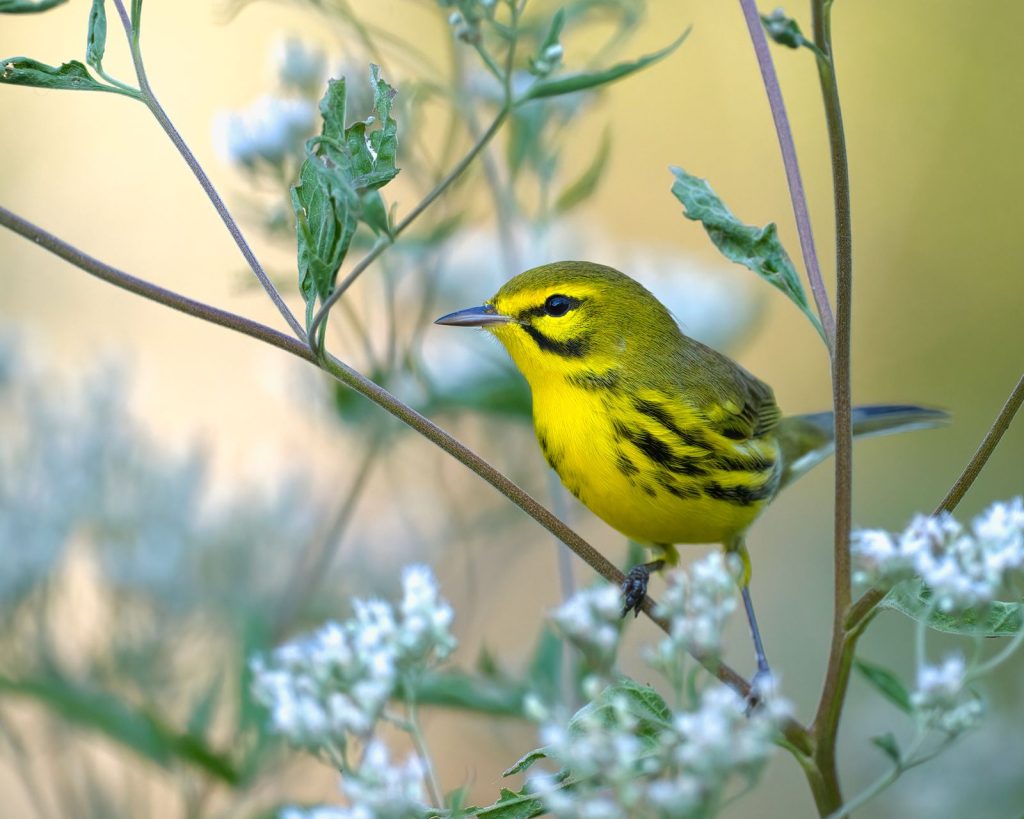
Seven states chose the northern cardinal as their state bird. Six chose the western meadowlark and five chose the northern mockingbird. Add up all the shared choices, and 32 of the 50 states have a bird that at least one other state also claims.
The flowers have more variety, and some of the stories behind them are better. One was picked by women who could not yet vote, another by schoolchildren and a third by a territorial legislature that argued over a parasite. Here is how the symbols came about.
A Campaign by Women’s Clubs
Most state birds trace back to the 1920s, when the General Federation of Women’s Clubs ran a campaign for official birds. Several legislatures responded, including those of Alabama, Florida, Maine, Missouri, Oregon, Texas and Wyoming. Kentucky adopted the northern cardinal in 1926, one of the earliest choices on record, and Alabama followed in 1927 with the yellowhammer, which is the northern flicker. Kansas chose the western meadowlark in 1933.
The last state to act was New York, which officially adopted a bird in 1970. Pennsylvania has never named a state bird. It did designate the ruffed grouse as its state game bird in 1931.
Birds That Several States Share
Some birds were popular choices. The most-shared ones are these:
- Northern cardinal (7). Illinois, Indiana, Kentucky, North Carolina, Ohio, Virginia and West Virginia.
- Western meadowlark (6). Kansas, Montana, Nebraska, North Dakota, Oregon and Wyoming.
- Northern mockingbird (5). Arkansas, Florida, Mississippi, Tennessee and Texas. South Carolina also had it from 1939 to 1948.
- American robin (3). Connecticut, Michigan and Wisconsin.
- American goldfinch (3). Iowa, which lists it as the eastern goldfinch, plus New Jersey and Washington, which lists it as the willow goldfinch.
- Chickadee (2). Maine and Massachusetts.
- Bluebirds (2 each). The eastern bluebird in Missouri and New York, and the mountain bluebird in Idaho and Nevada.
Oregon’s case has a twist. Its 1927 designation of the meadowlark was a governor’s proclamation that the legislature never adopted. In 2017, the meadowlark became Oregon’s state songbird.
Birds With a Story
The northern cardinal is named after Roman Catholic cardinals, who wear distinctive red robes and caps. Both sexes sing, and Carl Linnaeus described the species in 1758. The male’s red comes from carotenoid pigments in its diet, and males fed only yellow pigments turn a pale red. The oldest wild cardinal banded by researchers lived at least 15 years and 9 months.
Each of the seven states that picked the cardinal calls it simply the cardinal. It was also a candidate for Delaware’s state bird before losing to the Blue Hen.
The mockingbird has a name that says what it does. Mimus is Latin for a mimic, and polyglottos comes from Greek words meaning “many tongues.” The species has 43 to 203 song types, depending on the region, and Texas birds had 14 to 150 types.
Two Florida studies estimated about 134 and 200 types. Thomas Jefferson kept several pet mockingbirds, including one named Dick, and Harper Lee took the title and central metaphor of her 1960 novel from the bird.
Some states chose farm birds or island birds. Delaware named the Blue Hen Chicken in 1939, and Rhode Island named the Rhode Island Red in 1954. Both are the domestic chicken, Gallus gallus domesticus. Oklahoma named the scissor-tailed flycatcher its state bird in 1951 and the wild turkey its state game bird in 1990.
Hawaii chose the nene in 1957, a few years after its numbers hit bottom. The name comes from the bird’s soft call, and the nene is a goose that likely evolved from Canada geese that reached the islands about 500,000 years ago.
The nene’s feet are partly webbed, which suits life on cooled lava. Hunting and introduced predators such as mongooses, pigs and feral cats cut the population to about 30 birds by 1952, and Peter Scott’s reserve at Slimbridge in England helped breed birds in captivity during the 1950s for release in Hawaii. By 2022, the count had reached 3,862 birds.
Votes by Women and Children
Washington’s flower has one of the more charming origins. In 1892, Washington women chose the coast rhododendron before they had the right to vote. They wanted an official flower to enter in a floral exhibit at the 1893 World’s Fair in Chicago.
Six flowers were considered, and the choice came down to clover and the rhododendron, nicknamed the “rhodie.” Voting booths were set up for women throughout the state, and the rhododendron won when the ballots were counted. The Legislature did not designate the native Rhododendron macrophyllum as the official state flower until 1959.
Mississippi handed the job to schoolchildren. In November 1900, they voted on a state flower. The magnolia blossom won with 12,745 of 23,278 votes, which was more than half. The cotton blossom placed second with 4,171 votes, and the cape jasmine came third with 2,484.
The legislature took no action after the contest, so the magnolia was not official as a flower at that point. Lawmakers approved the magnolia blossom on February 26, 1952. By then, the state tree had been settled for 14 years, after a schoolchildren vote in 1938 among magnolia, oak, pine and dogwood.
Oklahoma and the Mistletoe
Oklahoma’s territorial legislature designated mistletoe as its floral emblem on February 11, 1893, through House Bill 49. The Oklahoma Historical Society describes it as the first official floral emblem set by any legislature. A woman named Mrs. Beeson of El Reno lobbied for it while the territory was choosing flowers for the 1893 World’s Columbian Exposition, and others wanted passion flowers instead.
The choice was contested from the start. After statehood, Senator John Golobie introduced a bill to keep mistletoe, and it became law in 1910. He recalled that mistletoe was one of the few plants available to decorate graves during the harsh winter of 1889.
Later designations added company. The Indian blanket became the official wildflower in 1986, and the Oklahoma rose was named the state flower in 2004. When the Indian blanket bill passed, a Capitol ceremony drew representatives of more than twenty tribes. Officials acknowledged, somewhat apologetically, that mistletoe remained the official floral emblem.
Flowers With Fine Print
Colorado made the columbine its state flower by an act of the General Assembly on April 4, 1899. A law from 1925 protects the plant, prohibiting digging or uprooting on public lands and limiting picking to 25 flowers, buds or stems in a day. The genus name Aquilegia is often said to mean “eagle-like,” but the writer Bill Casselman calls that wrong and traces it to a Latin word, aquilegus, meaning “drawing water.”
Texas has a precise legal history. On March 7, 1901, Lupinus subcarnosus, also called the sandyland bluebonnet or “buffalo clover,” became the only bluebonnet species recognized as the state flower. Most Texans preferred another species, Lupinus texensis, and in 1971 the Legislature extended the designation to any similar lupine found in the state. The belief that picking bluebonnets is illegal is a myth, and no law specifically prohibits it.
California’s golden poppy had a champion. Sarah Plummer Lemmon advocated for it and wrote the bill, and Governor George Pardee signed it in 1903. Spanish settlers in the late 1700s affectionately called the flower copa de oro, or “gold cup.”
One State, Several Flowers
Many states did not stop at a single flower. State lists use labels such as state flower, state wildflower, state floral emblem, children’s state flower, cultivated flower and even “beautification and conservation plant.” A few examples show how it works:
- Georgia. The Cherokee rose is the state flower, and the azalea became the state wildflower.
- Hawaii. The state wildflower is the maʻo hau hele, while the yellow hibiscus is named as the state flower.
- Maine. The floral emblem is the white pine cone and tassel.
- Mississippi. The magnolia is the state flower, and Coreopsis species are the state wildflowers.
Minnesota’s choice came with protection attached. The showy lady’s slipper, also called the pink-and-white lady’s slipper, became the state flower in 1902. A state law of 1925 protects it, and picking or uprooting it is illegal. It grows in 33 of Minnesota’s 87 counties, and it takes about eight years to flower from seed.