How Popcorn Became America’s Movie Snack
By Ellen Brooks · Published · 7 min read
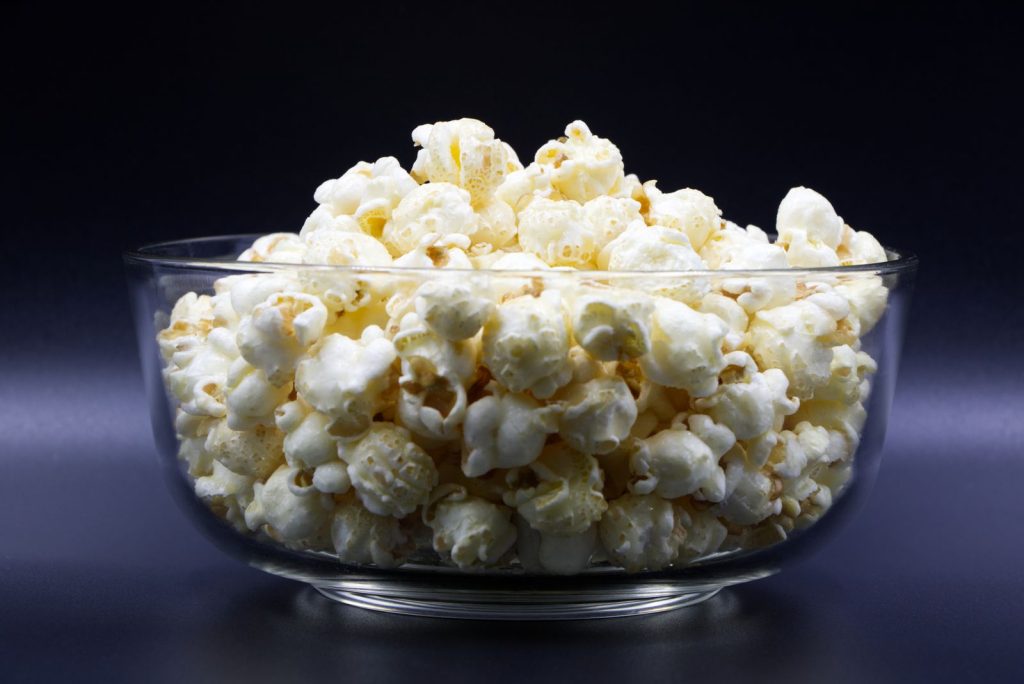
In the 1920s, movie theaters wanted nothing to do with popcorn. Owners aimed for an upscale image and worried about their carpets and rugs. By 1945, estimates put the share of America’s popcorn eaten at movie theaters at somewhere between 40 percent and more than half.
That reversal took a Depression, a war and a steam engine on wheels. It also rests on a food far older than any theater. Here is how the story runs, starting at the beginning.
Where Popcorn Began
Corn was domesticated about 9,000 years ago in the Balsas River Valley of central Mexico. The oldest popcorn evidence comes from Peru, where cobs from the Paredones and Huaca Prieta sites, found between 2007 and 2011, date to as early as 4,700 BCE. That is roughly 6,700 years ago. Archaeologists have also found kernels about a thousand years old in Peru and Utah.
In New Mexico, popping corn from Bat Cave was found in 1948 and 1950 and dates to as early as 3600 BCE. Corn was also being grown in the Amazon basin about 6,000 years ago. Popcorn is one of six major types of corn.
When the first European explorers reached the New World, they described people toasting popcorn for food, scattering it in religious ceremonies and wearing it as hair decoration. Popcorn was already used for food and for ceremony long before any machine existed.
Why a Kernel Pops
A popcorn kernel holds roughly 14 to 20 percent moisture inside its hull. As the kernel heats, the water turns to steam and pressure builds. The hull ruptures at about 135 pounds per square inch and 356 degrees Fahrenheit.
At that point the steam softens the starch, and the expanding steam turns the starch and proteins into a foam. The foam sets into a crisp puff, and the kernel expands to 20 to 50 times its original size. Growers dry kernels to about 14 to 15 percent moisture by weight for the best expansion, and over-dried kernels expand less and fewer of them pop.
Timing matters too. Heating too quickly can leave hard centers, and heating too slowly can leave kernels unpopped because steam escapes through the tip. The unpopped ones are called “old maids,” because they lack enough moisture to make steam. Popped kernels come in two main shapes:
- Butterfly. The flakes are irregular with protruding “wings,” and they are considered to have a better mouthfeel.
- Mushroom. The flakes are mostly ball-shaped and sturdier, so they suit packaged popcorn and confections such as caramel corn. Mushroom-only hybrids were developed in 1998.
The phrase “popped corn” first appeared in John Russell Bartlett’s 1848 Dictionary of Americanisms. The shorter name came later.
A Steam Engine on a Wagon
Charles Cretors, who lived from 1852 to 1934, was originally from Lebanon, Ohio. He opened a bakery and later a confectionery shop in Decatur, Illinois. He bought a peanut roaster for the shop, redesigned it and moved to Chicago to sell the new machine.
A vendor’s license dated December 2, 1885, marks the start of his company, which was established with the first large-scale commercial machine that popped corn in oil. The roaster was driven by a small steam engine. By 1893 he had a steam-powered machine that could roast peanuts and pop corn in oil, and the patent was granted that year. It was the first patented machine that popped corn in oil.
That same year, Cretors took his popcorn wagon to the Midway at the World’s Columbian Exposition in Chicago. After he gave out samples, people lined up to buy. Because the machine was mobile, it suited sporting events, circuses and fairs, and vendors could sell on the street without a kitchen. By 1900 he had introduced the Special, described as the first large horse-drawn popcorn wagon, and he later built the first popcorn machine with an electric motor.
From Breakfast Bowl to Candy Coating
Popcorn was not only a street snack. Americans ate it as a breakfast cereal in the 1800s, usually with milk and a sweetener. Popcorn balls, made by holding popped kernels together with a sugary “glue,” were very popular around the turn of the 20th century.
The 1893 fair also gave visitors something sweeter. F. Rueckheim introduced a molasses-flavored “Candied Popcorn” there, described as the first caramel corn. His brother Louis later altered the recipe and sold it in 1896.
The Theaters Said No
Popcorn was already common at circuses and fairs, but theaters held it at a distance. Its noisy, crumbly kernels clashed with the luxurious silent-film theaters, and food was often sold by attendees or by outside vendors. Sound arrived in 1927 and widened the audience, and by 1930 weekly attendance reached 90 million. Owners still hesitated to sell snacks.
The Great Depression changed the math. A bag of popcorn cost 5 to 10 cents, and audiences wanted cheap entertainment. Street vendors sold popcorn outside the theaters, and some theaters asked patrons to check their popcorn with their coats.
Thousands of theaters closed during the 1930s, so owners looked for new revenue. They began leasing lobby space to vendors for a daily fee, and they soon saw that selling snacks themselves was more profitable. Restrictions had already eased when sound arrived, since the film’s soundtrack could cover the noise of chewing. Later, managers bought their own machines, and the smell of popcorn became a sales tool.
A Dallas chain installed popcorn machines in 80 theaters but not in its five best, and within two years the popcorn theaters’ profits had risen while the five without popcorn had fallen into the red. In 1938, Glen W. Dickinson Sr. installed popcorn machines in his theater lobbies.
Jacob Beresin of Philadelphia is credited with pioneering the modern movie theater concession stand and founded the Berlo Vending Company. By the 1930s, concession stands were a main fixture in many theaters.
Kansas City offers a human-sized example. Julia Braden, born in 1862 to a German immigrant family in Illinois, settled there around 1900 and went into the popcorn, peanut and candy business. A newspaper article from 1931 claimed her first stand opened in a theater lobby in 1915, but historian Andrew F. Smith, author of Popped Culture: A Social History of Popcorn in America, considered that unlikely because lobby sales were very unusual before the 1930s.
By 1931 she ran four stands in or near theaters, and she claimed an income of about $15,000 a year.
Sugar Rationing and a Popcorn Boom
World War II gave popcorn another push. Sugar shortages and rationing cut candy production, and Americans ate about three times as much popcorn as they had before. Unlike sugar, popcorn was not rationed during the war.
By 1945, theaters accounted for a very large share of the popcorn eaten in the country, with estimates running from 40 percent to more than half. In the late 1940s and early 1950s, movie ticket sales fell while concession sales rose.
The snack even got its own advertisement. A 40-second spot called “Let’s All Go to the Lobby” debuted in 1957, and it was added to the National Film Registry in 2000.
Strings, Capitals and a State Snack
Popcorn has a life outside the theater. Strung on thread, it is used as a wall or Christmas tree decoration in parts of North America and on the Balkan Peninsula.
Six Midwestern localities claim the title of Popcorn Capital of the World. Specialty popcorn is grown mostly in Nebraska and Indiana, according to the Department of Agriculture. Illinois named popcorn its official state snack in 2003 after a proposal from second and third graders and their teacher at Cunningham Elementary School in Joliet.
A Candy Bar in Spencer’s Pocket
The microwave bag has a surprising origin story. In 1945, Raytheon engineer Percy Spencer was working near an active magnetron when he noticed that a candy bar in his pocket had melted. He placed popcorn kernels near the magnetron, and they popped. He then tried an egg, and its shell burst.
Raytheon filed a patent for a “microwave cooking process” later that year. In 1947, the company introduced the first commercial microwave oven. It weighed 750 pounds, stood nearly six feet tall, needed water cooling and cost about $5,000 at the time.
The microwave popcorn bag came much later. General Mills’ early design was patented on May 12, 1981. It used a susceptor, a metalized film that absorbs microwaves and concentrates heat on the flavor coating. From a melted candy bar in 1945 to a paper bag with a patent took 36 years.