
How Peanut Butter Became an American Staple
By Ellen Brooks · Published · 7 min read
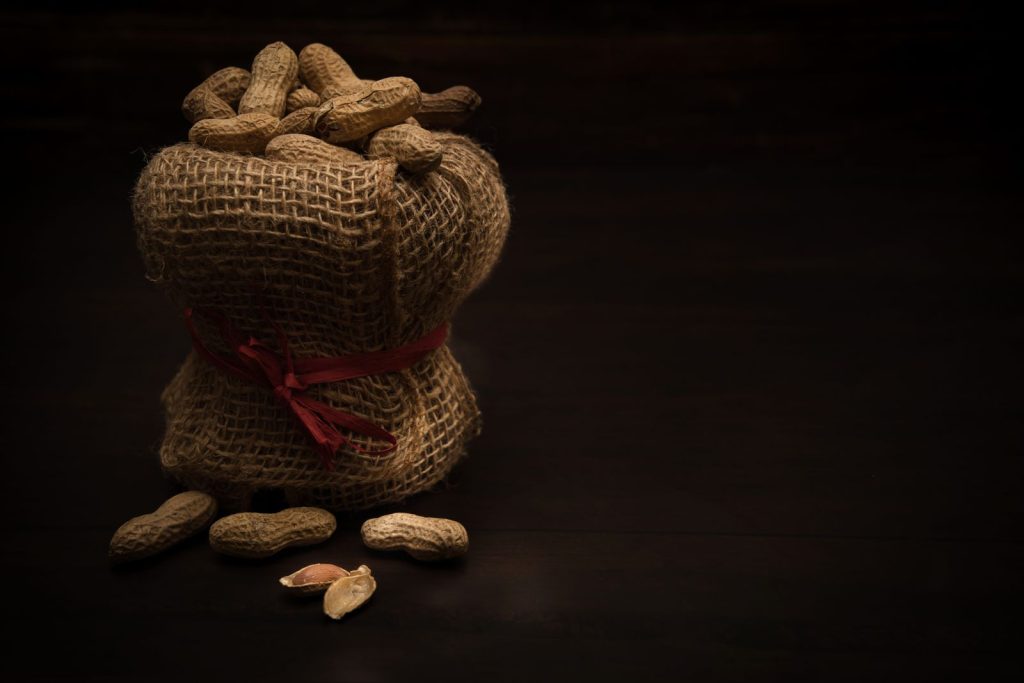
On October 21, 1884, U.S. Patent No. 306,727 went to Marcellus Gilmore Edson, a Canadian chemist, for a process of making peanut paste. The stated purpose was candy-making, not sandwiches. The paste in the patent cooled to a consistency resembling butter, lard or ointment, and that last comparison is the closest the document comes to a lunchbox.
From that odd start, the spread passed through a cereal-making doctor’s patent, a machine, a chemist who fixed the oil, and a Kentucky candymaker. The record has gaps, and a few popular stories do not survive a look at the paperwork. Here is what the sources support and where they disagree.
Peanuts Before the Patent
Peanuts are native to South America, east of the Andes, in the region around Peru, Bolivia, Argentina and Brazil. The oldest known pod remains are about 7,600 years old and were found in Peru, and cultivation almost certainly began earlier. Long before any European saw one, the crop had spread north into Mesoamerica. Spanish conquistadors found peanuts for sale in the marketplace of Tenochtitlan, and the Spanish word cacahuate comes from the Nahuatl name.
A popular claim says that the Aztecs and Incas ground roasted peanuts into a paste, which would make them the first peanut butter makers. That claim is repeated often, but the sources behind it are weak or secondary, so it belongs in the category of plausible and unproven. What the record does show is a crop that had already traveled widely long before any patent was filed.
A Paste for Candy
Edson lived from 1849 to 1940. He was born in Bedford, Quebec, and trained as a chemist at what is now McGill University. His patent describes milling roasted peanuts with heated equipment until they reached a fluid or semi-fluid state, and it says the paste could be mixed with sugar for confectionery.
Notice the order of the ideas. The patent treats the paste as an ingredient for candy, and the buttery texture appears as a description of the cooled result. The sources consulted do not say whether Edson ever sold the product, so his place in history rests on the patent and not on a famous business.
The Record in Order
After Edson, the story becomes a relay of names and dates. This list gives the main steps as the sources record them.
- 1884: Edson receives the patent for peanut paste.
- 1898: John Harvey Kellogg is granted a patent on May 24. He boiled his peanuts instead of roasting them.
- 1903: Ambrose Straub obtains a patent for a peanut-butter-making machine.
- Early 1920s: Joseph L. Rosefield develops a peanut butter that does not separate.
- 1928: Peter Pan peanut butter gets its name.
- 1932: Rosefield’s company begins producing Skippy.
- 1956: Jif is announced.
Two of these entries come with warnings. The sources give the title of Kellogg’s patent in two different ways, one as a process of producing alimentary products and another as a process of preparing nut meal, so the details are inconsistent. Rosefield’s patent is dated 1921 in one account and about 1923 in another. Both dates fall in the early 1920s, which is the safest way to state it.
The Oil Problem
Early peanut butter had a practical flaw. The peanut oil separated from the ground peanuts, and the product did not keep well. Rosefield’s answer was to partially hydrogenate the oil, much as vegetable shortening is made, so that it blended with the peanut grit and stayed creamy. His company promised a shelf life of one year.
The first big licensing deal gave the process to Derby Foods, which sold the new spread under the names Dainty and Delicia. Sales were weak. In 1928 the company renamed it after the title character of J. M. Barrie’s play, and one account says it then became a best seller.
Rosefield’s own brand, Skippy, followed in 1932. He later developed a smoother churning method, and his brand created the first chunky-style product by mixing in peanut fragments. His company introduced wide-mouth cylindrical jars in 1935. In 1955 the family sold Rosefield Packing and the Skippy brand to Best Foods.
Inside the Factory
The basic method has not changed much since the early inventors. Peanuts are dry-roasted, either in batches in a revolving oven or continuously in a hot-air roaster. A batch roast runs at about 320 degrees Fahrenheit for 40 to 60 minutes, and the peanuts are then cooled to about 86 degrees.
Next comes blanching, which removes the skins. Hot air at about 280 degrees softens them, and steam and bristles or rubber belts take them off. Water blanching is a newer method.
The peanuts then pass through two grinders, a medium grind and a fine grind. Salt, sugar and a vegetable-oil stabilizer may be added at the fine stage, and chopped peanuts go in for the chunky style. Before jarring, the mixture is cooled to about 120 degrees in a heat exchanger. A natural jar leaves out the stabilizer, which is why its oil can rise to the top.
Did George Washington Carver Invent It?
No, and the dates make it simple. Edson’s patent came 12 years before Carver joined Tuskegee. Others had developed and patented peanut butter methods in the United States and Canada before Carver published his bulletin.
What Carver did was promote the crop. He urged farmers to grow peanuts to help restore soils worn out by repeated cotton planting, and his 1916 bulletin, How to Grow the Peanut and 105 Ways of Preparing it For Human Consumption, was issued as Tuskegee Institute Experimental Station Bulletin 31. The recipes in it were gathered from other bulletins, cookbooks and newspapers. In 1921 he testified before Congress in support of a tariff on imported peanuts, and the Fordney-McCumber Tariff of 1922 included that duty.
Accounts that credit him with single-handedly transforming the peanut industry exaggerate his impact. The accurate version is still impressive: he was a visible advocate at a moment when the crop was growing in importance.
Peanut Butter Meets Jelly
The first published mention of peanut butter as a bread spread came about five years before 1901, so roughly the middle of the 1890s. The earliest published recipe pairing it with jelly appeared in 1901, in an article by Julia Davis Chandler in the Boston Cooking School Magazine. She suggested tea sandwiches made with peanut paste and currant or crab-apple jelly, and she believed the idea was original. That belief is her own claim, not an established fact.
The sandwich became a major part of American cooking in the 1950s and 1960s, and the classic version uses grape jelly and white bread. The sandwich’s exact origin is disputed, though it is generally understood to be American. One source says American soldiers in the Second World War sometimes ate peanut butter and jelly sandwiches because the ingredients kept for a long time. The popular image of veterans bringing the habit home and spreading it is described by the same source as a common picture, not a documented outcome.
Manufacturers eventually put the pairing in one package. In 1968, Smucker’s introduced Goober Grape, a jar that combined peanut butter and jelly. On December 21, 1999, the company received a U.S. patent for a sealed crustless sandwich, and in 2000 it began selling Uncrustables, a frozen version of that design.
From Big Top to Jif
The last brand in this story has the most surprising start. In 1946, William T. Young created a peanut butter in Lexington, Kentucky, and sold it under the name Big Top. Procter & Gamble bought Big Top and its Lexington manufacturing facilities from Young in 1955.
The company reformulated the product and named it Jif, and the new name was publicly announced in April 1956. The sources do not explain why that name was chosen. Creamy and Crunchy styles made their nationwide debut in 1958.
One account says Jif was sweeter than rival brands because its recipe included sugar and molasses, and that account gives 1955 as the launch year, a year earlier than the April 1956 announcement. Dates for a product’s start often differ this way, depending on whether a source counts the purchase, the recipe or the public debut.
The packaging has a history too. Peter Pan was first sold in tin cans and switched to glass jars during the Second World War because of metal shortages, according to one account. The story of the peanut butter jar is, in part, a story of what the country had on hand in a given decade.