Surprising Facts About North American Animals
By Ellen Brooks · Published · 8 min read
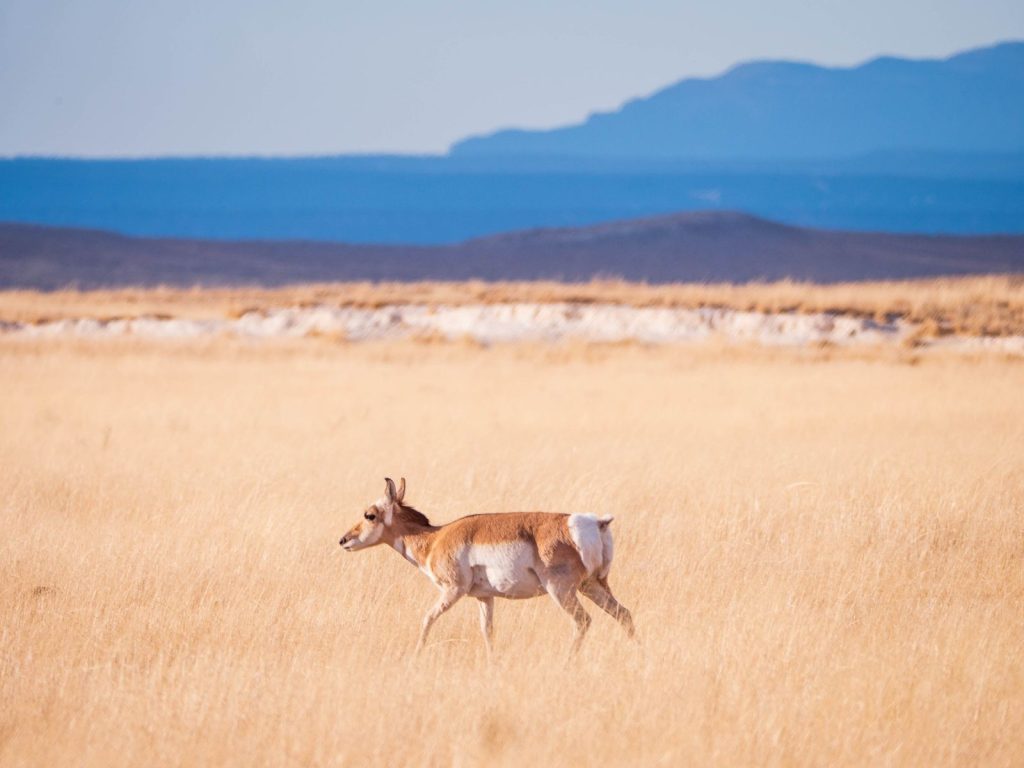
The fastest land mammal in the Western Hemisphere is a pronghorn, and it is not an antelope. Its speed depends on how far it runs: about 55 miles per hour over half a mile, 42 over a mile and 35 over four miles. A cheetah is faster in a sprint, but the pronghorn can hold its top pace far longer.
That small mismatch between name and reality shows up again and again among North American animals. The continent’s wildlife has collected a surprising number of misleading labels, odd biology and near misses. Here are some of the best examples, starting with the names.
Names That Mislead
Early settlers named animals by comparison, and the comparisons did not always hold up. A few well-known examples show how far some names drift from the facts:
- Pronghorn. It is often called the American antelope because it resembles Old World antelopes. It is actually the only surviving member of its own family, Antilocapridae, and its closest living relatives are the giraffe and the okapi. The name comes from its horn sheaths, which branch and have a forward-pointing tine.
- Prairie dog. It is a ground squirrel and belongs to the squirrel family. The name came from its habitat and from a warning call that resembles a dog’s bark, and it was in use at least as early as 1774.
- Horned toad. It is a lizard, not an amphibian. The scientific name of the genus, Phrynosoma, means “toad-bodied,” a nod to the flat, round shape and the slow, still habits.
- Buffalo. Samuel de Champlain applied the French word for buffalo to the animal in 1616. In American English, both “buffalo” and “bison” are accepted.
Built for Distance
The pronghorn’s speed raises a question that scientists still debate: why would a grassland animal need to run so fast? One argument, published in 1997, was that pursuit predators such as the extinct American cheetah-like cats drove the evolution of its running abilities. Later studies pushed back, arguing that the adaptations appeared before such predators lived in North America and may be tied instead to the spread of open grasslands.
The pronghorn also has an unusual feature on its head. The bony core of its horn is permanent, but the outer sheath is shed and regrown every year. Male sheaths average about 10 inches, while female horns are much smaller and rarely have a prong.
The animal lives west of the Mississippi River, from southern Saskatchewan and Alberta down into Mexico. Around 1900, its numbers had fallen so low that the Boone and Crockett Club considered extinction likely. By the 1920s, hunting had reduced the population to about 13,000. Protection and hunting limits helped it recover to an estimated half a million to a million since the 1930s.
The Opossum’s Odd Résumé
The Virginia opossum has been called the northernmost marsupial in the world. It has 50 teeth, more than any other North American land mammal, and a long, hairless tail that can grip branches and carry small objects.
Its reproduction is unusual. Gestation lasts only 11 to 13 days, and the tiny newborns climb into the mother’s pouch and latch onto one of her 13 teats. They stay in the pouch for about two and a half months. An average litter is eight or nine, though more than twenty can be born, and only about one in ten survives to adulthood.
The famous habit of “playing dead” is a response to extreme fear. It can last several hours, and the heart rate drops by about half during the episode. The word opossum comes from an Algonquian word, wapathemwa, meaning “white animal.”
Armadillos Come in Fours
The nine-banded armadillo has a reproductive quirk that few mammals share. A single fertilized egg forms an embryo that splits into four after implantation, so a litter is four genetically identical siblings. Each has its own amnion and umbilical cord, but all four share a placenta. Gestation lasts four months, and each newborn weighs about three ounces.
The armadillo’s other talents are just as odd. Its nose can detect prey through about eight inches of soil, and a single animal may keep up to a dozen burrows. It can hold its breath for up to six minutes, which lets it cross a river by walking along the bottom.
The ability to hold its breath evolved to keep the snout submerged in soil while foraging, and the river crossing is a side benefit. When badly frightened, an armadillo can jump three to four feet straight in the air. That reflex makes it a particular hazard on highways.
A Lizard That Squirts Blood
The horned lizard has a defense that startles even biologists. At least eight species can shoot a stream of blood from the corners of their eyes, reaching up to five feet. They restrict blood flow from the head, which raises pressure and ruptures tiny vessels near the eyelids.
The blood confuses predators and tastes bad to dogs and cats, though it does not deter birds. This is a last resort, and the lizards rely mostly on camouflage and stillness.
Horned lizards also have a narrow diet. They eat large numbers of harvester ants. Of the 21 species in the genus, 15 live in the United States.
One Cat, Forty Names
The cougar holds the Guinness record for the animal with the most names, with more than 40 in English alone. The best known are mountain lion, puma, panther and catamount. Catamount has been in English since at least 1664, while the earliest written use of mountain lion dates to 1858.
Which name people use depends on where they live. Puma is the most common name in scientific writing, mountain lion is common in the United States, and cougar is most common in Canada.
The cougar is also the most widely distributed wild land mammal in the Western Hemisphere. Its range spans 110 degrees of latitude, from the Yukon in Canada to the southern Andes in Chile. It cannot roar, since it is not a true lion, but it is the largest member of its subfamily that can purr.
Two Heavyweights at Home in the Water
The North American beaver is the largest rodent on the continent. Adults usually weigh between 24 and 71 pounds, with about 44 pounds typical, and the broad, flat tail adds another 8 to 14 inches. The tail slaps the water as a danger signal and also serves as a place to store fat.
Beavers build dams from branches, rocks, grass and mud, and the deep water behind a dam protects them from predators. Their lodges are made of sticks and mud, with entrances that open underwater. A beaver can stay submerged for up to 15 minutes, and its nostrils and ears seal shut below the surface.
The fur trade nearly erased the species. Estimates put the number of beavers before that trade at 100 to 200 million, and by the early 1900s they survived mostly in isolated pockets. After protection, the population recovered to an estimated 10 to 15 million.
The moose is just as comfortable in a lake. It is the tallest, largest and heaviest living deer, and the largest confirmed bull weighed about 1,800 pounds and stood roughly seven and a half feet at the shoulder. Moose wade in to feed on aquatic plants and to cool off, and they have been known to dive more than 18 feet to reach plants on the bottom. They are the only deer that can feed underwater, and their nostrils close under the pressure.
Moose antlers are an annual project. Bulls drop them after the autumn mating season and grow a new set in spring, which takes three to five months. The widest spread on record is about seven feet. The word moose was borrowed from Algonquian languages, and early sources suggest it comes from a term meaning “he strips off.”
The Bison’s Close Call
The animal that Champlain called a buffalo came close to disappearing. One count put the population at 541 in 1889, and the species is described as nearly extinct in the 1880s. Estimates of the herds before that decline run to tens of millions.
Bison are among the heaviest land animals in North America, and the heaviest wild bull on record weighed about 2,800 pounds. They have been observed running at 40 to 45 miles per hour. In 2016, the bison was named the national mammal of the United States.
The name itself has a long trail. Champlain took his word from French, and the French word goes back to the Greek boubalos. A name that began in the Mediterranean world ended up attached to the largest wild animal on the Great Plains.