The Stories Behind Classic American Desserts
By Ellen Brooks · Published · 8 min read
A newspaper declared in 1902 that “No pie-eating people can be permanently vanquished.” Americans have always taken their desserts seriously, and the best-loved ones come with origin stories to match. The trouble is that many of those stories change when someone checks the dates. Here are eight classics, with the legend as it is told and the record as it stands.
Apple Pie Was Not Born Here
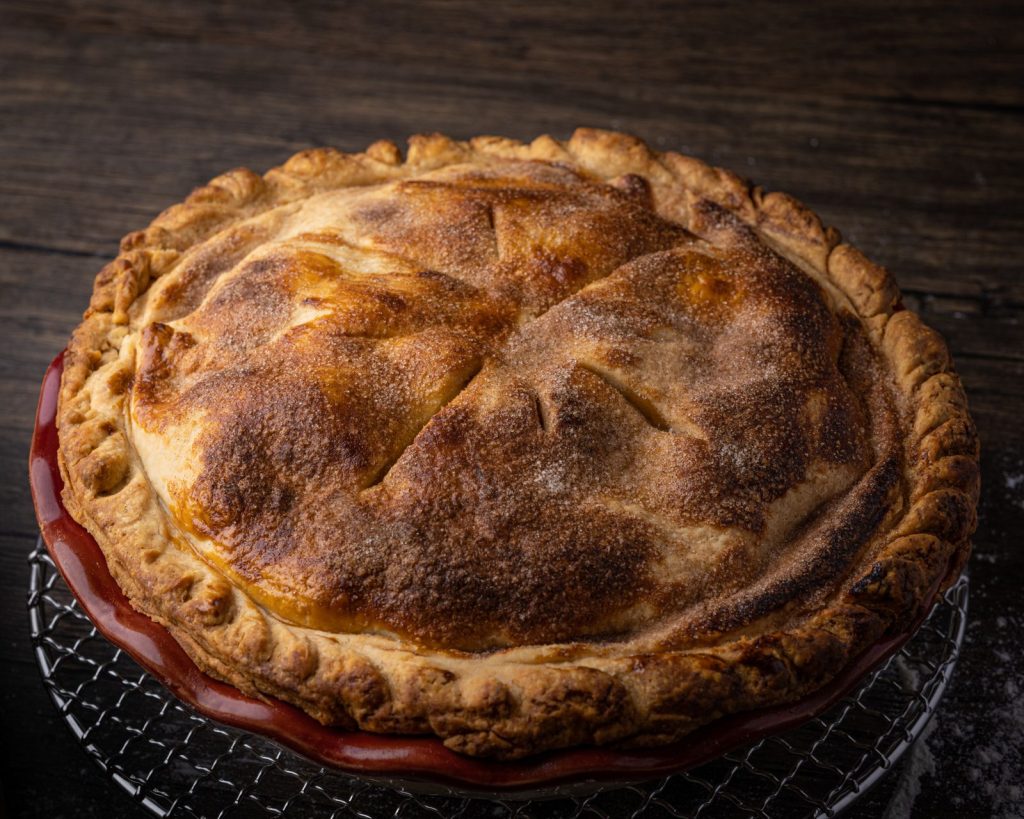
Apple pie was first recorded in 14th-century England, and the Forme of Cury, a collection of recipes from that century, includes an apple tart. A Dutch-language cookbook printed in Brussels in 1514 has a recipe for appeltaerten, and recipes for Dutch apple pie go back to the Middle Ages. Apples themselves were improved over thousands of years, and their center of diversity lies in the region of eastern Turkey and southwestern Russia.
The pie reached the colonies with English, Dutch and Swedish settlers in the 17th and 18th centuries. The only native North American apples were crabapples, which are small and sour, so colonists relied on European varieties. Amelia Simmons’s American Cookery of 1796 includes two apple pie recipes.
The pie’s place in the national image came later. American soldiers in both world wars loved it, and the phrase “as American as apple pie” stands for anything typical of American culture.
The Cake Called a Pie
Boston cream pie is a cake, and the name has a plain explanation. Cakes and pies were baked in the same pans, and the two words were used interchangeably. The dessert is credited to a French chef at the Parker House Hotel in Boston, Augustine François Anezin, whose name is also spelled Sanizan or Sanzian, reportedly for the hotel’s 1856 opening.
That date is reported and not confirmed, since the creation is estimated to fall somewhere between 1834 and 1856. The original is described as two sponge cake layers made with French butter, a thick custard filling, rum syrup, custard-coated sides with toasted almonds and a chocolate fondant top. Using baking chocolate as a coating was a new process at the time.
The name settled slowly:
- Parker House menus listed it first as chocolate cream pie, then as Parker House chocolate cream pie, and finally as Boston cream pie.
- The name “chocolate cream pie” first appears in the Methodist Almanac in 1872.
- “Boston cream pie” appears in the Granite Iron Ware Cook Book in 1878.
- The earliest known recipe for the modern version appears in Miss Parloa’s Kitchen Companion in 1887, under the title “chocolate cream pie.”
Massachusetts declared it the official state dessert on December 12, 1996.
The Brownie and Its Legend
The popular story says that in 1893, Bertha Palmer, whose husband owned the Palmer House Hotel in Chicago, asked a pastry chef for a small dessert to serve ladies at the World’s Columbian Exposition. The result was the Palmer House Brownie, with walnuts and an apricot glaze. The story is called a legend, and the name came later and was not used in cookbooks at the time.
The paper trail looks different. In the 1880s, dinner parties themed around the color brown were popular, and by the 1890s they had grown into “Brownie Banquets” decorated with figures from Palmer Cox’s comic characters, The Brownies. Fannie Farmer’s Boston Cooking-School Cook Book of 1896 included a brownie recipe with molasses and a nut but no chocolate.
A Chicago cookbook published an unleavened chocolate cake called “Brownie cake” in 1899, and food writer Stella Parks calls it a proto-brownie, the earliest example she found. By 1904, newspapers in Chicago and the Northeast were printing recipes with modern proportions. In 1906, Farmer’s revised book added chocolate to her recipe, although sources differ on why.
A popular story credits a housewife in Bangor, Maine. One reference work rejected it in 2007, while another in 2013 said that 1904 cookbooks supported it.
The Cookie and the Inn
Ruth Graves Wakefield and her husband Kenneth owned the Toll House Inn in Whitman, Massachusetts. She created the chocolate chip cookie in the 1930s, though sources differ on the exact year. The most popular account says she ran out of nuts and substituted chopped chocolate.
Other versions cite a butter shortage, a wish to use up stock or a hope that the chocolate would melt. A former employee blamed mixer vibrations that dropped chocolate into the dough. Modern food writers call the accident accounts improbable, pointing to Wakefield’s home economics training and her organized kitchen.
In the 1970s, Wakefield herself said she wanted something different from the thin butterscotch nut cookie served with ice cream. The recipe appeared in 1938 in Toll House Tried and True Recipes as “Toll House Chocolate Crunch Cookies.” By February 1939, Boston newspapers were calling them chocolate chip cookies.
In March 1939, Wakefield agreed to let a New York licensed manufacturer of Nestlé chocolate print the recipe on its wrappers. A year later the deal expanded to cover all of the company’s packaging and advertising. She was reportedly promised a dollar, although some anecdotes say a lifetime supply of chocolate. Massachusetts named the chocolate chip cookie its official state cookie in 1997.
Five Towns and One Boat
Most historians believe the banana split was created in 1904 in Latrobe, Pennsylvania. David Strickler, a 23-year-old pharmacy student, was working as a soda jerk at Tassell Pharmacy and had been inspired by fruit-laden sundaes he saw in Atlantic City that summer. The original cost 10 cents, twice the price of other sundaes.
The first version had three scoops of different ice creams and fruit toppings. It was served over a banana split down the middle in an elongated glass dish called a “boat.” The National Ice Cream Retailers Association certified Latrobe as the birthplace in 2004, and Pennsylvania approved a historical marker in 2013.
Other places have their own claims:
- Wilmington, Ohio. Ernest Hazard said he made it in 1907 to attract college students on slow winter days. Historians find Latrobe’s evidence more convincing, but both towns hold an annual festival.
- Boston. One claim places its creation at the Butler Department Store in 1905.
- Davenport, Iowa. The city claims 1906.
- Columbus, Ohio. The credit goes to Letty Lally at Foeller’s Drug Store.
The lack of evidence makes these last three hard to prove.
The Cone With Many Parents
The ice cream cone has the most crowded origin story of all. An 1807 illustration of a Parisian girl may show a cone, and an 1825 French cookbook described rolling cones from “little waffles.” The earliest certain evidence is an 1888 English cookbook by Agnes Marshall, whose “Cornet with Cream” recipe called for almond cones baked in an oven. Many historians consider her the inventor of the modern cone.
In 1902 and 1903, two Italian-born inventors took out patents. Antonio Valvona of Manchester patented a waffle-iron-style device for baking biscuit cups, and Italo Marchiony of New York City patented a mold with a break-apart bottom.
The best-known story belongs to the 1904 World’s Fair in St. Louis. Ernest Hamwi, a vendor of Syrian origin, is believed by some to have curled a waffle cookie into a cone after a neighboring vendor ran out of paper cups, though the story is disputed. Abe Doumar and his family of Norfolk, Virginia, tell a different version in which he rolled a waffle around a scoop of ice cream bought from another vendor.
Baked Alaska and a Mistaken Map
The story of baked Alaska starts in Paris. At the 1867 World’s Fair, the chef of the Grand Hôtel made a “scientific dessert” that used Benjamin Thompson’s finding that egg whites conduct heat poorly. Thompson was living in Bavaria, and the chef believed Bavaria was in Norway, so the dish was called “Norwegian omelette.”
The American name came later. The name “baked Alaska” was supposedly coined at Delmonico’s in New York in 1876 to honor the United States purchase of Alaska in 1867. The restaurant’s original recipe was called “Alaska Florida.”
In 1969, the Hungarian physicist Nicholas Kurti used a microwave oven to make a reverse version, a frozen meringue shell filled with hot liquor, which is also called “Frozen Florida.”
Key Lime Pie and the Aunt Sally Story
A widely told story credits a cook named Aunt Sally, who worked for William Curry in the Florida Keys, with inventing the pie in the late 1800s. There is no evidence for it, and the oldest version of the tale appeared in 1995 promotional materials for a bed and breakfast in Curry’s former house.
The documented record is thinner. A restaurant menu listed “lime pie” in 1926, though what it was is unclear. A Miami newspaper described a “Tropical Lime Chiffon Pie” made with condensed milk and egg yolks in 1933, an “icebox lime pie” was mentioned as a Keys specialty in 1935, and a recipe titled “Key Lime Pie” was published in 1940. The pie probably derives from a 1931 “Magic Lemon Cream Pie” in a promotional brochure from Borden, a condensed milk producer.
Food writer John Egerton dated the pie in the Keys to at least the 1890s, and a fellow writer found the claim credible, but no earlier solid sources are known. Florida passed a law in July 2006 naming it the official state pie. An earlier bill in 1965 proposed fines for anyone advertising a non-Key-lime pie, and it failed.