How the Supermarket Was Built, One Invention at a Time
By Diane Porter · Published · 7 min read
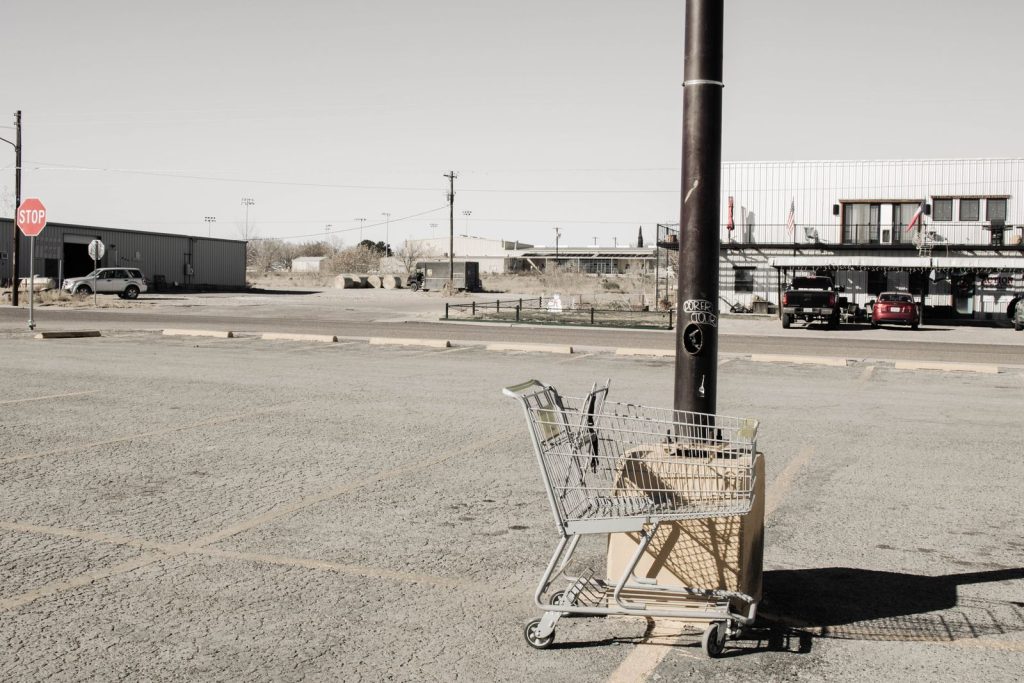
When the first shopping carts appeared in an Oklahoma City grocery chain in 1937, customers wanted nothing to do with them. Men found the folding metal frames unmanly, and women thought they looked like baby carriages. The inventor, Sylvan Goldman, responded by hiring people to push the carts around his stores until real shoppers followed.
That small episode shows how the supermarket was built. No single person designed it. Several inventions, from self-service to the barcode, arrived over about sixty years, and each one solved a problem that the one before had created.
Piece One: Letting Shoppers Help Themselves
Before the supermarket, a typical grocery customer handed a list to a clerk, who fetched each item from a shelf or barrel. Clarence Saunders changed that with a store in Memphis, Tennessee, in 1916. He called it Piggly Wiggly, and shoppers took a wooden basket and selected their own goods.
The date is slightly fuzzy. One account says the store opened on September 11, 1916, while the company marks its anniversary on the 6th because of construction delays. One description of the first store has customers entering through a turnstile and walking past 605 packaged items in four aisles, arranged by department, on their way to a checkout at the exit.
Piggly Wiggly grew fast. Nine locations existed around Memphis by the end of its first year, and the chain later franchised and sold stock to the public. Saunders lost control of the company in the early 1920s after a failed stock maneuver on Wall Street, and by one count the chain had close to 3,000 stores at its peak.
Self-service did something unexpected. When customers chose for themselves, the package had to do the talking, and one marketing professor has called the idea the origin of branding. Saunders also got a patent for “self-serving stores” in October 1917, and he reportedly placed impulse items such as candy near the register. Later merchandisers would go further, putting products at a child’s eye level.
Nobody can say for sure where the name came from. The company’s own history offers a story involving a train and pigs under a fence, but it also says Saunders was reluctant to explain it. When asked, he reportedly said he chose it so that people would ask exactly that question.
Piece Two: Bigger Stores, Lower Prices
Lower prices had been a goal of the big chains for years. The Great Atlantic and Pacific Tea Company, known as A&P, introduced “economy stores” in 1912 that dropped credit and free delivery. By 1918 all of its stores had converted to cash and carry.
Self-service made small stores more efficient, but the supermarket added size. Michael Cullen, a former Kroger branch manager from Herrin, Illinois, supplied it. In August 1930, he opened King Kullen in a former garage on Jamaica Avenue in Queens, New York. It covered about 6,000 square feet and carried roughly 1,000 items.
Cullen had pitched a similar idea to Kroger in a letter in 1929, and the company’s president, William Albers, turned it down. Albers later became associated with the word itself. He apparently used “supermarket” formally in 1933 for a chain of his own.
Who was first remains a debated question. The Food Marketing Institute calls it subject to dispute but leans toward Cullen, while Piggly Wiggly was earlier at self-service. Two Los Angeles chains, Von’s and Ralphs, also claim priority, and merchants in Texas and Southern California reportedly arrived at similar ideas around the same time.
The early counts show how quickly the format spread. A researcher counted 94 supermarkets in 1934, and about 1,200 in 85 cities by 1936. Cullen died in 1936, with fifteen stores to his name.
The giant chains took notice. A&P had nearly 16,000 small stores by 1930, and it opened its first supermarket in Ypsilanti, Michigan, in 1936. That same year, Congress passed the Robinson-Patman Act, which regulated wholesale pricing in response to competition from chain stores.
The format also proved tough. According to one history, supermarkets held up during World War II, when many small grocers closed.
Piece Three: The Cart
A bigger store creates a new problem, because baskets get heavy. Goldman conceived the cart in early 1936, reportedly after a folding chair gave him the idea of a basket on a seat with wheels on its legs. With a mechanic, he built a metal frame that held two wire baskets and called the result a folding basket carrier.
One of the first carts went on sale in June 1937, advertised under what Goldman called a “No Basket Carrying Plan.” Customers resisted until Goldman hired models and greeters to demonstrate the design, and then it caught on quickly. A mechanic named Arthur Kosted developed an assembly line to build them in numbers.
The cart was not finished yet. In 1946, a man named Orla Watson designed a version that nested inside another through a swinging rear door, and he received a patent in 1949. That nesting idea is the reason stacks of carts fit in a corral outside a store. Goldman added a child’s seat to his carts in 1947, according to one account, and a later inventor patented a retractable seat belt for carts in 1967.
Piece Four: Cold and Wrapped
Selling food off open shelves meant most of it had to be packaged in advance. Meat, produce and other perishables were cut and wrapped, and the wrapping itself became an advertising space on the shelf. Packaging stopped being a simple container and became a salesperson.
Freezing added another category. Clarence Birdseye perfected flash-freezing in 1927 and sold the process to General Foods. Frozen food did not catch on right away, since stores needed better freezer cases before they could keep it properly.
Home refrigerators spread after the Second World War, and the supermarket benefited. Shoppers could stock up and keep food cold at home, and cars made the trip to a larger store easy.
Piece Five: A Place to Park
Postwar suburbs added another requirement. A big store needed a big lot, and free parking became necessary once shoppers drove to the store and loaded their cars. One early definition of the supermarket included adequate parking space as a condition.
The result was a larger store. King Kullen’s first location had only 6,000 square feet and about 1,000 items. By the 1950s, stores averaged about 20,000 square feet and 6,000 items.
Around 1960, supermarkets accounted for about 70 percent of the nation’s grocery sales. A format that barely existed in 1930 had become the default.
The Numbers in One Place
Here is how the pieces stack up in dates:
- 1916: Piggly Wiggly opens in Memphis.
- 1917: Saunders receives a patent for self-service stores.
- 1930: King Kullen opens in Queens.
- 1936: About 1,200 supermarkets in 85 cities, by one count.
- 1937: One of the first folding basket carriers goes on sale.
- 1949: The nesting cart receives a patent.
- About 1960: Supermarkets sell roughly 70 percent of groceries.
The Last Piece: A Beep at the Register
For decades, a cashier typed in each price. That changed on June 26, 1974, at 8:01 in the morning, at a Marsh supermarket in Troy, Ohio. The first item scanned was a 10-pack of chewing gum, and the register rang up 67 cents.
The barcode behind it, the Universal Product Code, grew out of work at IBM. George Laurer was assigned to a scanner and label project in late 1969, with a colleague named Woodland helping to plan it. He presented a proposal in December 1972 and took charge of the label design in 1973.
A council formed that same year to manage the numbering format. The gum was not the only barcoded item in that shopper’s cart, but it was the first one picked up at the register. A replica of the packet is kept at the Smithsonian’s American history museum.
By 1985, scanners reading these codes were operating in about 10,000 stores. Saunders had imagined a fully automated store as well, but his later experiments, among them one called Keedoozle, never succeeded. The scanner did what he could not, by making the checkout lane nearly automatic.