What Thomas Edison Really Invented (and What He Didn’t)
By Tom Brennan · Published · 7 min read
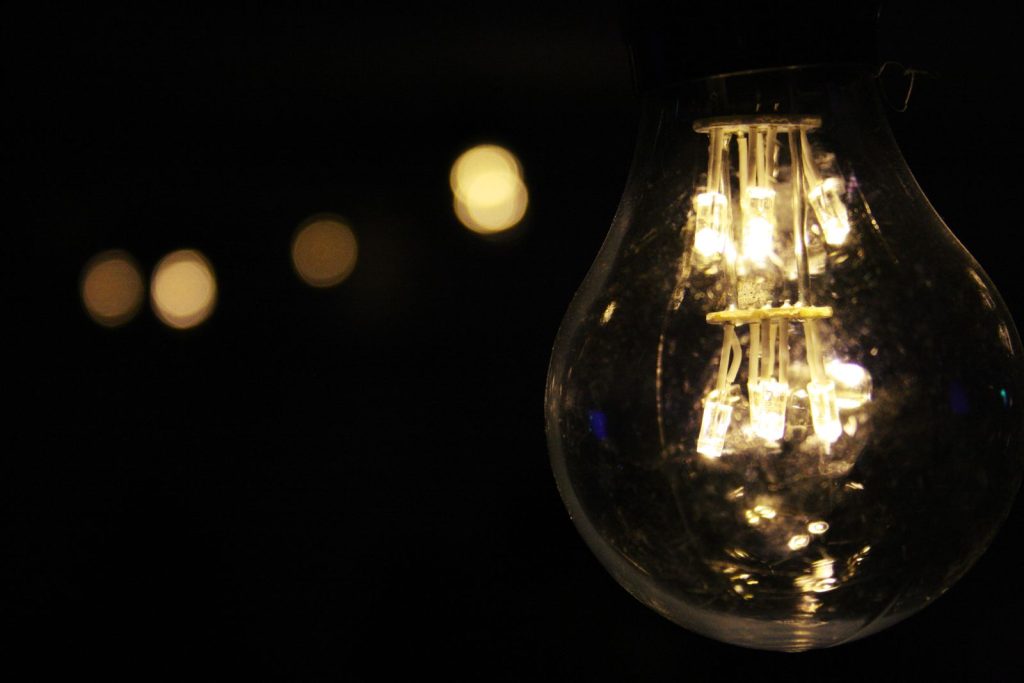
In October 1879, a carbon filament inside a glass bulb at Menlo Park, New Jersey, glowed for a little more than thirteen hours, and Thomas Edison counted it as a triumph. Eight months earlier, in Newcastle, England, a chemist named Joseph Swan had shown a working carbon-filament lamp to a crowd of about seven hundred people. Edison’s bulb was not the first, and that is only the beginning of the story.
Edison is remembered as the great American inventor, and he earned a lot of that fame. He also benefited from a habit of attaching one name to what was often a team effort. Going invention by invention gives a fairer picture.
The Record Nobody Has Matched
Edison, who was born in Milan, Ohio, in 1847 and began his career in 1863, held 1,093 United States patents, alone or with others. The Rutgers project that preserves his papers describes that total as unchallenged by any other inventor. The biggest groups fell into a few fields:
- Electric light and power: 389 patents
- The phonograph: 195
- The telegraph: 150
- Storage batteries: 141
- The telephone: 34
Those numbers say less about a lone genius than about a system. At Menlo Park, where he bought land at the end of 1875 and had a laboratory built over the following months, Edison gathered skilled machinists and scientists who tried idea after idea. The lab itself may have been his most original creation, an organization built to produce inventions on purpose, and Britannica credits him with founding the world’s first industrial research laboratory.
Much of the output came out of shared work in the shop, and the motion picture camera, covered below, is a good example.
Verdict: Invented, the Phonograph
The phonograph is the clearest case of an Edison original. In early December 1877, he and his staff demonstrated a talking machine at the New York offices of Scientific American. The first model recorded sound on a sheet of tinfoil wrapped around a cylinder. A speaker talked into a horn, a needle attached to a thin diaphragm pressed grooves into the foil, and tracing those grooves again played the sound back.
Earlier devices had traced the shape of sound waves, but none had played them back. That ability is what made the machine astonishing to the public.
The early version was more of a curiosity than a product. Edison’s lab launched a commercial machine in 1887 at its new West Orange location, and he announced in 1889 that it had been perfected. Mechanical problems lingered until the late 1890s.
Verdict: Made Practical, the Light Bulb
Electric light had a long family tree before Edison. Humphry Davy passed current through a thin strip of platinum in 1802 and made it glow. Warren de la Rue put a coiled platinum filament inside a vacuum tube in 1840. Swan, meanwhile, experimented with carbon for years and demonstrated his lamp in 1879.
Edison announced in October 1878 that he could make a practical electric bulb, a claim that was ahead of his results. It took another year of testing before a filament lasted long enough to impress anyone. Accounts differ by a day on the date of the famous test in October 1879, and on whether the filament burned for a little over thirteen hours or more than fourteen.
Edison’s contribution was to turn the idea into a working, repeatable system. He aimed for a lamp with high resistance that needed far less power than the arc lamps of the day. High resistance also meant that thinner wires could carry the current to a house, which kept the cost of wiring a whole neighborhood within reach. He paired that with a better vacuum, made with a Sprengel pump, and a more durable filament.
The physics is simple to describe. Current heats a thin filament until it glows white-hot, and the vacuum matters because in open air a hot carbon thread would burn away within moments. After testing many materials, his lab settled on carbonized bamboo, which lasted more than 1,200 hours and stayed standard for about ten years.
He demonstrated the lamp publicly at Menlo Park on December 31, 1879, and he applied for a U.S. patent in November of that year, which was granted in January 1880.
Edison also saw that a bulb alone was not enough. A customer needed electricity delivered to the house, which meant central generation, wiring and a meter, and his company built all three. Its Pearl Street station in lower Manhattan began supplying current in September 1882.
When Swan began manufacturing bulbs in Britain, a patent fight loomed, and the two sides chose to merge their interests there rather than litigate. The combined company sold bulbs under the Ediswan name into the 1930s.
Verdict: Improved, the Telephone
Alexander Graham Bell invented the telephone, not Edison. Edison worked on telephone transmitters at Menlo Park between 1876 and 1881, and what he built was a better mouthpiece. In the spring of 1878 his team developed a transmitter built around a small button of carbon, and it grew from his earlier work on carbon resistance.
The carbon transmitter improved how voices carried over a line. The design stayed in use for nearly a century, which makes it one of the longest-lived inventions in his portfolio.
Verdict: Shared Credit, Motion Pictures
Motion pictures were a team project in the strictest sense. Edison and his employee William Dickson built the Kinetograph, a motion picture camera, and the Kinetoscope, a cabinet that let one viewer look through a peephole at a loop of film. The camera came out of the West Orange laboratory, which opened in 1887.
Edison built a film studio, nicknamed the Black Maria, in 1893, and Kinetoscopes were introduced in 1894. The studio was a tar-paper building with a roof that opened to the sun, and it sat on a pivot so it could be turned to follow the light.
Screening films for a room full of people was a different matter. Edison later acquired a projector designed by Thomas Armat and marketed it under his own name as the Vitascope. The cinema that followed owed something to many inventors in several countries, and Edison was one of them.
Verdict: A Flop, the Vote Recorder
One of his earliest patents was a commercial failure. In 1868, when he was about twenty-one, Edison applied for a patent on an electric vote recorder, a device meant to tally votes in a legislature. A state legislature declined to buy it, and it never found a market.
The lesson of the episode is a plain one. A clever machine still needs a customer who wants it. Edison moved on to a printing telegraph, which was used in a stock-quotation service, and to other telegraph improvements in his Newark workshops.
A Discovery Left on the Shelf
Edison’s most far-reaching find may be one he did not follow up. While working with light bulbs, he noticed soot patterns forming inside them and concluded that current was somehow flowing outside the filament. To catch it, he added an extra electrode inside the bulb, and it collected current only when the flow went in one direction.
That makes the gadget a close cousin of the diode, a one-way valve for electricity. Edison patented it as the Edison effect lamp and suggested it could regulate the current from a generator, but he never pursued the idea. He displayed it at an electrical exhibition in Philadelphia in 1884, where an English engineer saw it and took the idea home.
The British engineer John Fleming later refined the design. He published his research in 1889 and called the device a thermionic valve, though at first he found no use for it.
Later Guglielmo Marconi hired him as a consultant, since early radio receivers relied on a clumsy part called a coherer that could only detect signals. Fleming connected his valve to an aerial, where it turned an alternating signal into a one-way signal. That step helped lead the way toward amplifying radio signals and eventually to transmitting voices.
Historians disagree about how to assign credit. One museum curator has said Edison was simply ahead of his time, since nobody could have seen the point of the device before radio existed. Others argue that Fleming made the changes that mattered and deserves the credit for the working device.
Either way, it is a fitting end to an accounting of Edison. He sometimes invented the thing outright, sometimes made someone else’s invention practical, and sometimes noticed something important and moved on to the next project.