Paul Revere’s Ride: The Legend and the History
By Tom Brennan · Published · 7 min read
At about eleven o’clock on the night of April 18, 1775, Paul Revere climbed into a rowboat in Boston. Two friends, Joshua Bentley and Thomas Richardson, rowed him across the Charles River to Charlestown, passing close to the British warship Somerset. On the far shore a merchant named John Larkin lent him a horse. The ride that made Revere famous had barely begun.
Most Americans know the story from a poem written more than eight decades later, and the poem changed a good deal. The real night was messier, shared among several riders and cut short for Revere himself. Following it hour by hour shows both what happened and where the legend wandered off.
A Summons From Dr. Warren
Revere was a silversmith and engraver by trade, and he also served as a colonial militia officer. He belonged to the Sons of Liberty and worked as a courier for Boston’s Committee of Public Safety. When the British intention to march out of the city became clear, a Patriot leader named Dr. Joseph Warren sent for Revere and for another rider, William Dawes, on the evening of April 18.
The goal was to warn the countryside, and in particular to reach John Hancock and Samuel Adams in Lexington. British troops were on the move toward Concord, and Warren sent two men who took two different routes. Dawes was the first rider he dispatched, and Revere followed.
Warren himself would not live long. He was killed at Bunker Hill on June 17, 1775, less than two months after that night.
The Lanterns
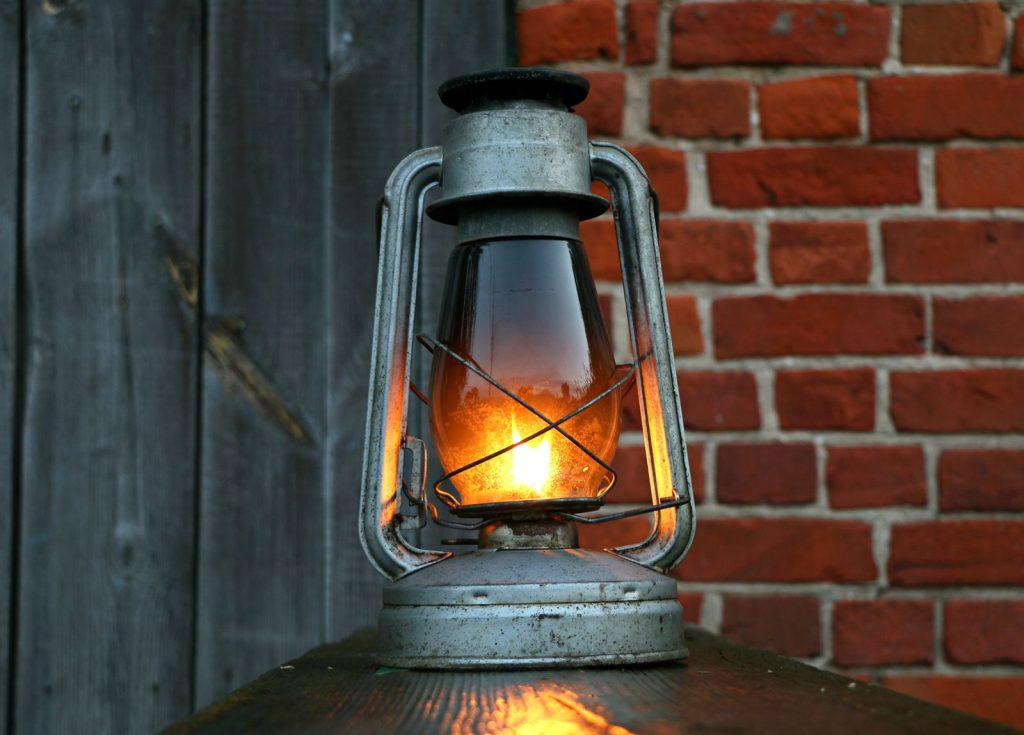
The most famous detail of the story is the signal in the Old North Church. Revere had arranged it the previous weekend, in case he could not leave Boston. A friend, probably Robert Newman, the church’s sexton, showed two lanterns briefly in the highest window of the bell tower at about ten o’clock.
Two lanterns meant the British would cross by water, in boats, instead of marching out over Boston Neck. This is where the poem gets it wrong. In the verses, Revere waits on the Charlestown shore for the signal. In the record, he already knew the route before he left and the lanterns were a backup for the case that he could not get out of the city.
The signal was real, but it was meant for the Patriots across the water. Because the lanterns showed only briefly, their meaning had to be settled in advance, which is why Revere arranged the plan days earlier. Revere himself did not need to see it.
Across the Water
The river crossing was the shorter route, and also the more dangerous one. The Somerset, a British warship, was close to the crossing. Dawes, by contrast, went out the long way, across Boston Neck and around the Back Bay.
Once on the Charlestown side, Revere rode through Somerville and Medford toward Lexington. He left Boston around eleven and reached Lexington sometime after midnight. Dawes arrived later after his longer ride, and the pair then agreed to continue toward Concord.
Revere rode a borrowed horse that belonged to Larkin, who was sympathetic to the Patriot cause, and he would not see it again that night.
What Revere Actually Said
In Lexington, about ten miles away, Revere warned Hancock and Adams and helped get them out of town. The popular image has him galloping from door to door crying that the British were coming. Accounts say otherwise.
According to the account usually cited, a militia sentry at Lexington asked Revere to be quiet, and Revere answered that the sentry would have noise enough before long and that the Regulars were coming out. The word regulars was the usual name for the British army. That wording also makes sense for a time when many colonists still thought of themselves as British.
The line “The British are coming” belongs to the legend and not to the record. It is the best-known myth of the ride, and the poem helped spread it.
The Patrol Near Lincoln
After warning Hancock and Adams, Revere and Dawes decided to continue to Concord. A third rider, Samuel Prescott, a young doctor on his way home to Concord, joined them. At about one in the morning, a British patrol stopped the three men near Lincoln. The same patrol had already picked up a local man named Solomon Brown and his companions.
What happened next is simple to list.
- Prescott escaped by jumping a fence, reached Concord and alerted the town.
- Dawes also got away. Tradition says he escaped through a ruse.
- Revere was captured, questioned and then released, but without his horse.
Revere never reached Concord. He walked back to Lexington on foot, and by about 4:30 that morning he and a man named John Lowell had gone to Buckman Tavern to retrieve Hancock’s trunk. After the capture, he played no further role in the fighting of April 19.
The Other Riders
The poem places Revere at the center and leaves out most of the cast. It does not mention Dawes, Hancock, Adams or the capture. Revere was only one of two riders who left Boston, and he was one of many messengers who spread the alarm that night.
Dawes received a measure of attention in 1878, when a descendant named Henry Ware Holland published a self-printed book called William Dawes and His Ride with Paul Revere. Prescott, who carried the alarm on to Concord, is far less remembered than Revere.
That is one of the odd outcomes of folk memory. The rider who reached Concord is little known, while the rider who was stopped on the road became a household name.
How a Poem Rewrote the Night
Henry Wadsworth Longfellow visited the North End of Boston in April 1860 and wrote his poem soon afterward. It first appeared in print in December 1860 in a Boston newspaper, then in the Atlantic Monthly in January 1861, and later in Tales of a Wayside Inn in 1863, where it appeared as “The Landlord’s Tale” within a longer collection of stories. The country was heading toward civil war, and the poem focused more on national unity than on accuracy. Written during a national crisis, it reached for a shared story of courage that readers in different regions could claim together.
Historians point to several changes it made.
- The lanterns became a signal Revere waited for, not a fallback.
- The poem has Revere reaching Concord, though he was captured before he got there.
- Revere rode alone, though he was one of two who left Boston and one of many who carried the warning.
- Hancock, Adams, Dawes and the capture dropped out of the story.
It is uncertain whether Longfellow read Revere’s own account before writing. He owned a 1832 magazine that printed Revere’s description of the ride, and a poem by Longfellow appeared in that same issue, which suggests he may have known of it. Revere himself left a deposition taken soon after the events and wrote about the ride afterward, and those accounts are collected in a book titled Paul Revere’s Three Accounts of His Famous Ride.
The Rides Before the Ride
April 1775 was not Revere’s first journey for the cause. From December 1773 to November 1775, he worked as a courier for the Boston Committee of Public Safety, riding to New York and Philadelphia. Researchers have documented 18 such rides.
One of them came in December 1774, when Revere rode to Portsmouth, New Hampshire, on rumors of a British landing. The rumors were false, but locals raided Fort William and Mary for gunpowder anyway. The fort was defended by only six soldiers.
That earlier ride shows how Revere should be remembered. He was less a lone hero on a single night than a trusted messenger who spent nearly two years carrying information between colonial leaders. The ride that made him famous was one important night in a longer career of delivering news.
The Portsmouth episode also shows the courier system at work. Revere carried word, and local people acted on it by raiding the fort. Messengers like him, working across the region, are what turned a few riders into an alarm that people heeded.