How the Drive-In Theater Solved Three Big Problems
By Diane Porter · Published · 7 min read
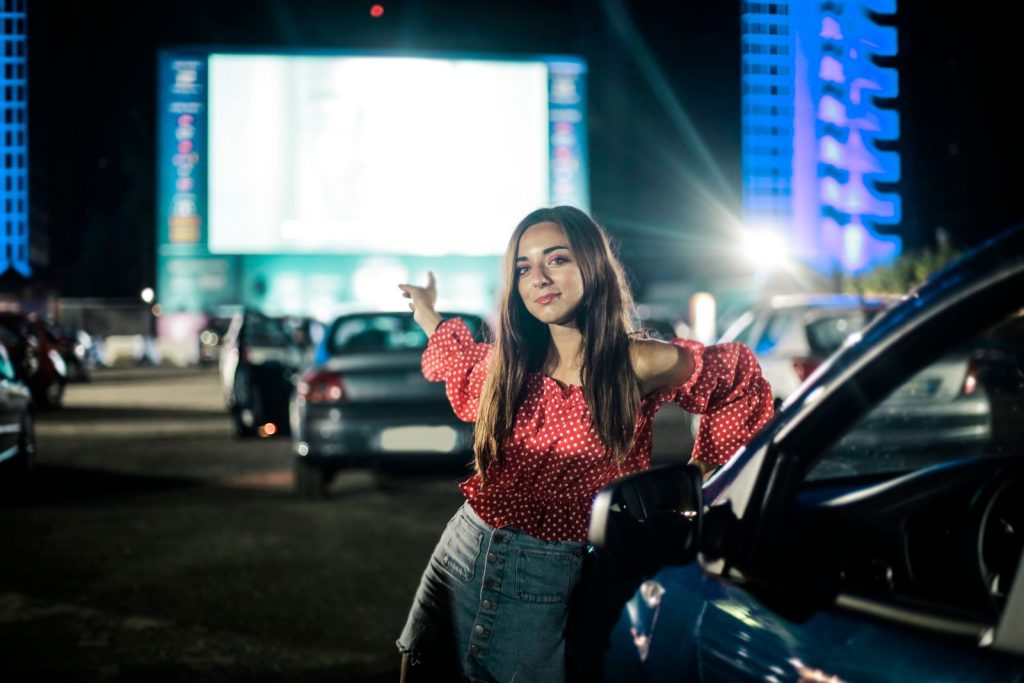
Admission on opening night, June 6, 1933, was 25 cents per car plus 25 cents for each person inside it, with a cap of one dollar for a full car. The place was a lot just outside Camden, New Jersey, and the film was a British comedy called Wives Beware. Watching a film from a parked car was a new idea, and the man behind it had spent years working out how to make it function.
His name was Richard Hollingshead Jr. The drive-in he patented had to solve three practical problems before it could succeed, and the story of those fixes explains why it grew so large and why it eventually faded.
A Backyard Experiment
Hollingshead worked as a sales manager in his father’s auto parts company in Camden. One story says he was inspired by his mother’s discomfort in ordinary theater seats, though that account is repeated without a firm source. Whatever the truth of that, a film watched from a comfortable car seat solved a problem that many moviegoers had.
His early setup used a 1928 Kodak movie projector, a car and sheets nailed between two trees at his home. One account adds a radio placed behind the screen for sound. Those details come from retellings, not from a documented record.
He filed a patent application on August 6, 1932, and the patent was granted on May 16, 1933. The theater opened less than a month later under the name Park-In Theaters, since the term drive-in became common only afterward. It carried a slogan promising that the whole family was welcome, no matter how noisy the children might be.
Rivals appeared quickly. Shankweiler’s in Orefield, Pennsylvania, opened in April 1934, followed that summer by a short-reel drive-in in Galveston, Texas, and later that year by the Pico Drive-In in Los Angeles. Weymouth, Massachusetts, got one in 1936.
Even so, the format spread slowly for years. High equipment costs and bad weather were part of the reason. Another part was a technical problem that still lacked a good answer.
Problem One: Seeing the Screen
In an ordinary theater, seats rise in rows. In a parking lot, the car in front blocks your view. Hollingshead experimented with raising the front wheels of cars so the driver behind could see over the car ahead, and the finished lots gave each parking space a ramp so that vehicles at different heights could all see the screen.
One account says the first lot held 400 cars, and another says that was the average size for drive-ins by 1942. The screen at the first theater is described as 40 by 50 feet. The basic layout, with cars angled up toward a screen at the far end, stayed in place for decades.
Problem Two: Hearing the Film
Sound was harder. The first lot used three large speakers supplied by RCA Victor, placed near the screen. The result at drive-ins of that kind was distorted, hard to hear in the back rows and loud enough to draw complaints from neighbors.
The breakthrough was the in-car speaker. RCA introduced a small speaker that hung on the car window, with its own volume control, and accounts place its arrival in the early 1940s. The dates vary by source, with one giving 1941 and another 1946. These speakers crackled and sounded uneven, and they became part of the drive-in experience anyway.
Radio finally took over in the 1980s. According to one history, only about 20 to 30 percent of drive-ins asked viewers to tune their car radios in 1982. By 1985 about 70 percent did, and the window speaker began to disappear.
Problem Three: Making It Worth the Trip
A drive-in sat outside town and needed customers to make a special trip. Owners solved that with the snack bar and the playground. Concession stands sold hamburgers, hot dogs, popcorn, candy and soda. Over the years, owners added extras that turned the lot into something close to a small amusement park:
- Playgrounds for children.
- Bottle warmers and diaper vending machines for families with babies.
- Miniature golf, swimming pools and, at some lots, fireworks.
- Motels with rooms that faced the screen.
Philip Smith, who operated nine of the fifteen drive-ins open in the United States before World War II, let children in free and built playgrounds. The model worked especially well after the war, when the baby boom and car culture arrived together. A drive-in was a cheap alternative to paying a babysitter, since the whole family could go along.
Teenagers had their own uses for the back rows, and in the 1950s the media gave the drive-in a nickname, passion pit, that painted it as improper. That was only part of the picture. The family audience was much larger.
The Inventor’s Side of the Story
Hollingshead did not stay in the business for long. He sold the original theater in 1935 and opened another. His company licensed the concept to Loew’s, a large theater chain, but by 1937 it was having trouble collecting royalties.
The patent itself did not last. One account says it was ruled invalid in 1949 and another says 1950, and the details of the ruling are not clear in either. Hollingshead died in 1975, long after drive-ins had become a familiar part of the American landscape.
One account says that drive-ins spread across the country after the patent was overturned. That timing is hard to square with the postwar boom, which was already under way by 1949, so the legal ruling was probably only one factor among several.
The Boom
The growth after 1945 was dramatic. Car culture, the baby boom and suburban development funded by the G.I. Bill all pointed the same way. A source counted only 95 drive-ins in more than 27 states in 1942, with Ohio having the most at eleven.
Then came the postwar surge. Drive-ins reached their peak in 1958, when there were 4,063 of them across the country. One of the largest was in Copiague, New York, on a lot of roughly 28 or 29 acres with parking for 2,500 cars.
Many drive-ins offered a mix of family films, science fiction, horror and late shows. Families brought lawn chairs and picnics, children ran between the cars, and teenagers enjoyed some freedom from their parents. According to one history, a few teens even tried to sneak in by hiding in car trunks.
Why the Screens Went Dark
No single cause ended the boom. Several pressures arrived together:
- Land values: the lots were large, and as suburban real estate grew more valuable, many owners sold to developers. A lot that held 2,500 cars was worth more as a building site than as a theater.
- Film supply: indoor theaters could schedule flexibly, so studios sent first-run films to them, and drive-ins were left with second-run pictures and B movies. Aging facilities and higher film rental fees added to the strain.
- Daylight saving time: it pushed the start of the show later into the evening in summer.
- Television: color sets and cable in the 1960s and 1970s, then VCRs and video rental in the early 1980s, kept families at home.
- Fuel worries: the energy crisis of the 1970s discouraged leisure driving, and smaller cars were less comfortable for a double feature.
By 1983, one count showed only 2,935 screens still operating. Few drive-ins were left by the 1990s.
A Flea Market in the Parking Lot
One survival strategy outlasted the picture shows. On November 22, 1963, Betty and Preston Henn opened the Thunderbird Drive-in Theater in Fort Lauderdale, Florida, with a single screen. After a trip to the West Coast in 1966, Henn added a flea market to the same property.
The market made the lot useful during the day, when a movie screen earns nothing. The operation grew to 11 screens by 1980. A theater that had begun as a one-screen drive-in turned into a daytime bazaar with a night job, and the model kept the lot busy when the movies alone could not.