The Disco Era: Rise and Fall of the Dance Floor
By Greg Lawson · Published · 7 min read
On Valentine’s Day in 1970, DJ David Mancuso opened the door of his loft in downtown Manhattan and welcomed a crowd to a private party. The music was danceable rhythm and blues, and the guest list was open to a wide mix of people. PBS lists that evening among the origins of what became the disco scene.
Nobody there was thinking about mirror balls or stadium crowds. Within a decade, though, the dance floor would sell tens of millions of records, fill a famous nightclub on 54th Street and end one summer night with a fire in center field.
The Word Behind the Word
“Disco” is short for discotheque, a French word for a nightspot where people danced to records rather than live bands. That was the novelty: the music came from a turntable, and the person choosing it mattered as much as any singer.
PBS reports that in 1973 the writer Vince Aletti described the dance crowds of New York’s underground clubs in Rolling Stone. Soon after, the shortened word became the name for the whole movement.
The DJ Needed More Time
A dance floor has one basic problem. When a three-minute record ends, the dancing stops, and the room loses its momentum. A producer named Tom Moulton went after that problem from several directions.
In 1971, after a visit to Fire Island, he spent about 80 hours splicing reel-to-reel tapes of current hits into one continuous, beat-matched mix for a club called the Sandpiper. He also began making extended studio edits, and one account says his first successful one stretched B.T. Express’s “Do It (‘Til You’re Satisfied)” from three minutes to just over five and a half. In 1975 he applied the idea to a whole record side, linking three songs on a Gloria Gaynor album into one unbroken stretch of music so that DJs could take a break.
The most lasting contribution came by accident. In 1974, Moulton had finished a remix of Al Downing’s “I’ll Be Holding On” and wanted reference discs to show the record company. The mastering engineer had no seven-inch blanks, so he cut the disc on a twelve-inch blank instead.
The engineer spread the grooves across the wider surface and raised the levels. Moulton was struck by how loud and bassy it sounded, and the label released it that way. The wider grooves could hold more information and gave a more powerful sound on club systems. An inadvertent innovation became the basic unit of dance music.
Velvet Ropes on 54th Street
Disco’s most famous room opened on April 26, 1977. Studio 54 was created by Steve Rubell and Ian Schrager, who had met as college roommates at Syracuse University. Britannica calls it the most chic disco of the decade and says it drew on earlier underground New York clubs.
A velvet-rope entrance regulated who got in. Other clubs offered a different mood. Britannica says a Brooklyn club called Odyssey 2000 played the same music for a younger, less affluent crowd, and later underground rooms such as Galaxy 21 and Paradise Garage let DJs like Larry Levan, Walter Gibbons and David Mancuso remix records live. Studio 54 closed on February 4, 1980, with a party called “The End of Modern-day Gomorrah.”
A Movie and a Soundtrack
Saturday Night Fever opened in December 1977, premiering in New York on December 12, with John Travolta as Tony Manero. It was based on a 1976 New York magazine article by Nik Cohn, who later acknowledged that he had invented most of it. Much of the story was set at a real Brooklyn disco, and the production added a lighted dance floor to the club’s interior.
The soundtrack was bigger than the film. Released on November 15, 1977, it spent 24 straight weeks at number one in the United States in the first half of 1978 and won the Grammy for Album of the Year. It sold more than 40 million copies worldwide, which made it the best-selling album in music history until Thriller overtook it.
The Bee Gees supplied “Stayin’ Alive,” “How Deep Is Your Love,” “Night Fever” and “More Than a Woman,” and two earlier singles, “Jive Talkin'” and “You Should Be Dancing,” joined them on the album. The brothers also wrote “If I Can’t Have You,” which Yvonne Elliman sings on it. The film itself carried a reported budget of $3.5 million.
A Dance, and a Song Written at the Door
Every dance floor needs a step. Van McCoy wrote “The Hustle” while he was in New York to make an album, and his music partner, Charles Kipps, had watched patrons dancing the Hustle at a nightclub called Adam’s Apple. The single came out in the spring of 1975 and reached number one on the Billboard Hot 100 and the soul chart that summer. It won the Grammy for Best Pop Instrumental Performance in early 1976.
Another hit came from being turned away. By guitarist Nile Rodgers’s account, he and bassist Bernard Edwards were refused entry to Studio 54 on New Year’s Eve 1977, where Grace Jones had invited them without telling the club’s staff. The song they devised afterward poked at the club’s long lines, exclusive guest list and rude doormen. Rodgers has said the refrain began as a profanity, which he softened because it could not be broadcast on radio.
Atlantic Records released “Le Freak” on September 21, 1978. It went to number one on the Hot 100 and on the soul chart, which is a long way from a rejection at the door. The story rests on Rodgers’s own telling, so treat the details as his version of events.
Songs That Defined the Floor
The disco catalog is long, and a quick list shows how wide it ran:
- “Never Can Say Goodbye” (Gloria Gaynor): PBS describes her recording as the first record mixed specifically for discotheques.
- “Lady Marmalade” (Labelle): another recording PBS counts among the key songs of the disco years.
- “Love to Love You Baby” (Donna Summer): an early signature song for the singer, released in 1975.
- “Young Hearts Run Free” (Candi Staton): a soul-based dance hit that PBS also lists.
- “Stayin’ Alive,” “Night Fever” and “How Deep Is Your Love” (Bee Gees): the group’s songs anchored the Saturday Night Fever soundtrack.
- “Le Freak” (Chic): the number-one single that grew out of the doorway story above.
- “Y.M.C.A.” and “Macho Man” (Village People): hits that were built to be danced and sung along with.
Earl Young is credited with pioneering the four-on-the-floor drum beat that defines the sound, a steady kick on every beat that kept bodies moving. Britannica adds that disco was studio music that used early electronic technology, with rhythm taking priority over lyrics and vocal subtlety.
The Night Records Burned
By 1979, some listeners felt that the genre had been overexposed. PBS notes that many fans felt disco had been commercialized after rock acts began recording in the style. On July 12, 1979, a radio host named Steve Dahl and White Sox promotions director Mike Veeck staged Disco Demolition Night between games of a doubleheader at Comiskey Park in Chicago.
Admission cost 98 cents for anyone who brought a disco record. The park filled beyond its usual capacity, and thousands more gathered outside. Dahl blew up the collected records in center field, and then fans spilled onto the field, climbed the foul poles, lit bonfires and removed bases. Tigers manager Sparky Anderson demanded a forfeit, and the game was ultimately recorded as a forfeit.
Disco artists later said that anti-Black and anti-gay feeling lay behind the backlash. Whatever its causes, the night became shorthand for the end of the disco boom.
What Came After
Disco did not vanish; it changed names, and it left a mark on the people who worked the booths. Larry Levan, the DJ at Paradise Garage, is still spoken of as a legend of the craft.
The handoff to a new style came from Chicago. PBS notes that Frankie Knuckles, a producer and DJ working at The Warehouse in Chicago, helped create house music. The style takes its name from that club and keeps the disco beat.
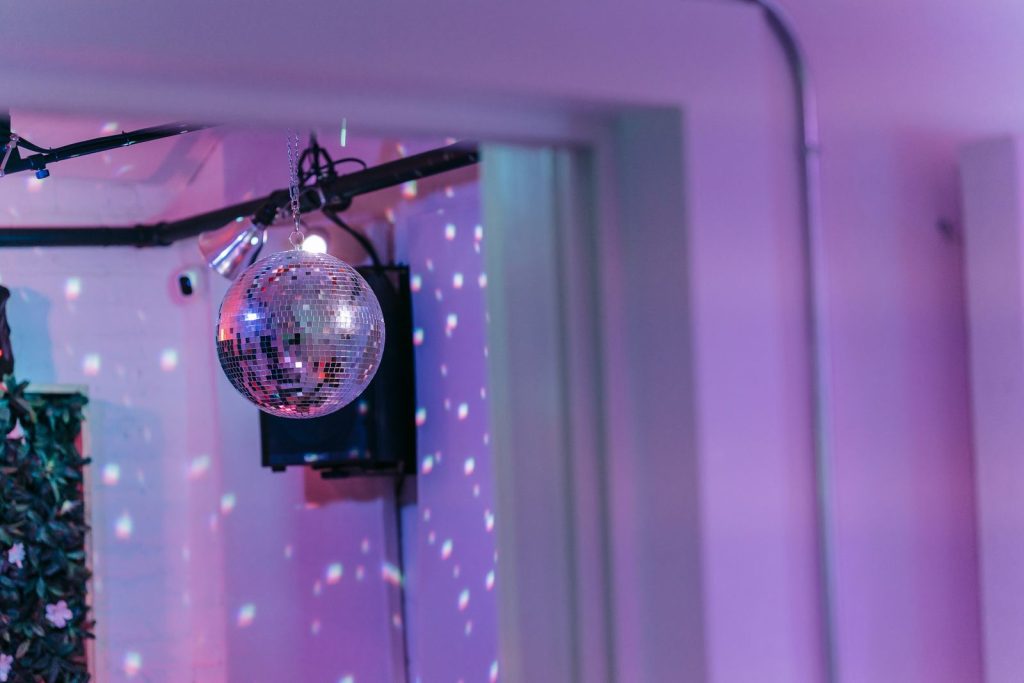
The mirror ball remains the most recognizable symbol of the era, but the longer story is one of technology: the long mix, the twelve-inch record and the idea that a DJ could hold a room for hours. Those inventions outlived the scene that produced them, and they are still part of how dance music gets made.