Who Wrote the Declaration of Independence?
By Tom Brennan · Published · 7 min read
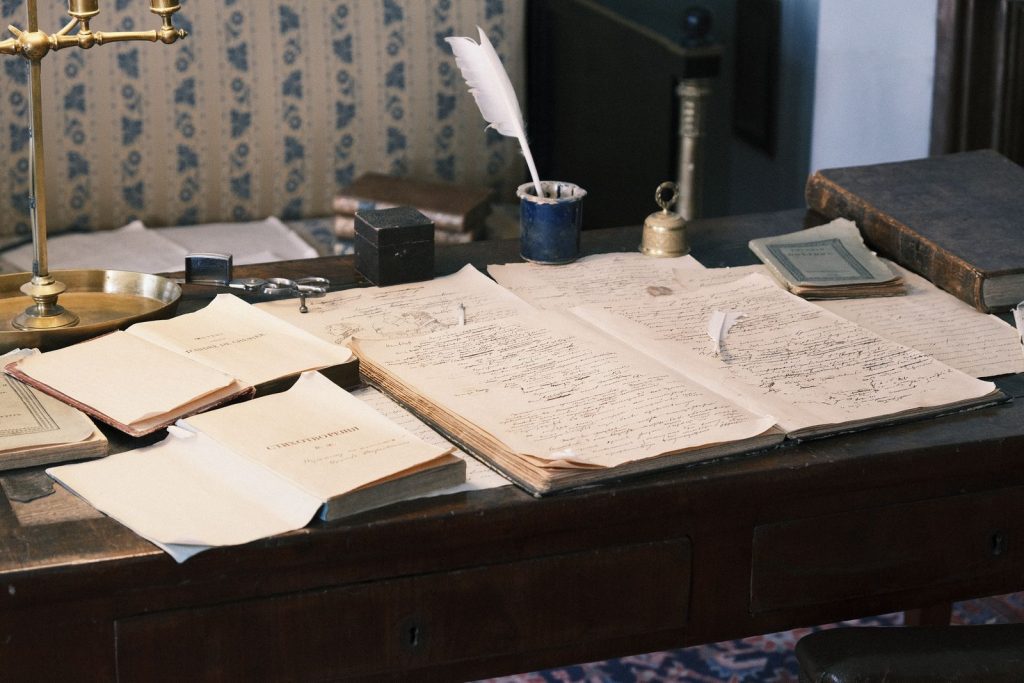
The Declaration of Independence began as a resolution, not a document. On June 7, 1776, Richard Henry Lee of Virginia presented a three-part resolution to Congress in Philadelphia, and one part of it declared that the colonies were free and independent. Nobody had yet been asked to write a declaration explaining why. That job came a few days later, and it passed through many hands before it reached the version Americans know.
Asking who wrote the Declaration has a short answer and a long one. The short answer is Thomas Jefferson. The long answer includes a committee, two famous editors, a Congress that cut a quarter of the text and a printer who worked through the night.
A Resolution Came First
Lee’s resolution had three parts. Besides independence, it called for seeking foreign alliances and preparing a plan of confederation.
It did not win immediate approval. In the second week of June, Congress postponed further discussion of independence for three weeks. The National Archives records that the postponement was carried by a vote of seven colonies to five, with New York abstaining.
Congress used the pause to prepare. It appointed a committee to draft a document that would explain independence, so that a text would be waiting if the resolution passed.
That committee was appointed on June 11, 1776, and it had five members.
Why Jefferson Got the Job
The Committee of Five consisted of John Adams, Benjamin Franklin, Thomas Jefferson, Robert R. Livingston and Roger Sherman. Looking back decades later, Adams wrote that Jefferson received one more vote than any other member, and that Adams himself came next, so the two were named to prepare the paper. Adams recalled that he urged Jefferson to take the task, and that Jefferson answered, “Well, if you are decided I will do as well as I can.”
According to Adams’s later letter, he gave Jefferson three reasons. The first was that Jefferson was a Virginian, and Virginia ought to appear at the head of the business. The second was that Adams was obnoxious, suspected and unpopular, while Jefferson was very much otherwise. The third was that Jefferson could write ten times better than Adams could.
Adams wrote his account in 1822, long after the events, so it reflects memory more than a record made at the time. Still, it matches the broad outline in other sources, which agree that Jefferson wrote the first draft.
Seventeen Days on Market Street
Jefferson largely wrote the draft between June 11 and June 28, mostly alone. He worked in a rented second-floor room at 700 Market Street in Philadelphia, a building now known as the Declaration House. In those roughly seventeen days, he produced the document that became the foundation of the final text.
Jefferson did not invent every idea from scratch. For his sources, he drew on his own draft of a preamble for the Virginia constitution and on George Mason’s draft of the Virginia Declaration of Rights. Many historians also point to the philosophy of John Locke as a major influence, while other scholars emphasize writers such as Burlamaqui, Hutcheson and Vattel, as well as the English Declaration of Rights of 1689.
His original version is often called the Rough Draught, and the Library of Congress hosts a reconstruction of it prepared by the scholar Julian Boyd. The result was a document built on arguments that educated colonists already knew, and its power came largely from how clearly it assembled them.
Edits Before Congress Saw It
Before the draft went to Congress, Franklin and Adams suggested corrections. One change is often credited to Franklin, who may have turned Jefferson’s phrase “sacred and undeniable” into “self-evident.” The attribution is uncertain, and historians say only that Franklin may have been responsible.
Adams’s own memory points the other way. In his 1822 letter, he said he did not remember making or suggesting a single alteration, and he did not recall Franklin or Sherman criticizing anything. This is a good example of how even firsthand recollections can differ about small details. Because such questions are not settled by the surviving papers, historians weigh later recollections like Adams’s against the drafts themselves.
The committee then gave Jefferson’s revised copy to Congress. On June 28, 1776, the committee presented it, and Congress ordered it to lie on the table.
The Vote and the Cuts
The vote on independence itself came first. On July 2, Congress adopted Lee’s resolution with twelve colonies in favor and New York not voting. Pennsylvania’s delegation approved it by a vote of three to two, after John Dickinson and Robert Morris abstained.
Only then did Congress turn to the text of the Declaration. Delegates revised it from July 3 into July 4, and the final wording was approved in the late morning of July 4. They cut about a quarter of Jefferson’s draft, and they removed his passage blaming King George III for the slave trade, a change that by the usual account was meant to win over South Carolina and Georgia.
On July 9, the New York convention approved the action, so that all thirteen colonies had agreed.
The Passage Congress Removed
One of the best-known cuts was the part blaming the king for the slave trade. Jefferson’s draft accused him of waging “cruel war against human nature itself, violating it’s most sacred rights of life & liberty” by keeping open a market where men could be bought and sold.
Jefferson himself enslaved people, a fact that has long complicated how readers weigh that passage and the Declaration’s words about equality. Adams, writing years later, suggested that the passage may have been the reason the original draft was not published at the time. That is only his guess, since the record does not explain why.
What survived was a shorter and more moderate text, and Congress’s editing gave it the form in which generations of Americans have read it. The document that Jefferson wrote and the one that Congress approved were related but not identical.
Printed That Night, Signed in August
The first copies were printed by John Dunlap on the night of July 4 and dispatched on July 5. It is not known how many copies he printed, but 26 of these “Dunlap broadsides” are known to survive. A newspaper, the Pennsylvania Evening Post, published the text on July 6.
The famous parchment came later. On July 19, Congress ordered the Declaration “fairly engrossed on parchment” and signed by every member, and it added the word “unanimous” to the title. The finished sheet measures 24¼ by 29¾ inches. Timothy Matlack was probably the engrosser, which shows that even the famous parchment has uncertain details.
The signing took place after July 4.
- August 2, 1776: the journal records that the engrossed Declaration was signed. The idea that every delegate signed on July 4 is a misconception.
- John Hancock: as president of Congress, he signed first, with a large signature.
- Fifty-six delegates: this was the eventual total of signers, though not all were present on August 2.
- The committee: four of its five members, Adams, Franklin, Jefferson and Sherman, signed.
- Non-signers: they included John Dickinson and Robert R. Livingston, the fifth member of the committee.
Adams Predicted the Wrong Day
John Adams was sure that July 2 would become the great American holiday. In a letter to his wife Abigail, written in early July 1776, he predicted that later generations would celebrate it as the great anniversary festival, with guns, bells, bonfires and illuminations across the continent. He was right about almost everything except the date.
Congress voted for independence on July 2, but the Declaration itself was revised until July 4, when Congress authorized its publication. Printed copies circulated from July 5. The text was read aloud in Philadelphia on July 8 and in Boston on July 18, where Abigail Adams heard it read from the balcony of the Old State House and described the scene in a letter dated July 21.
That is why the chain of hands matters. The independence vote, the document explaining it and the public announcement happened on different days, and each step had its own authors, editors and printers.