Hollywood’s Golden Age: How the Studio System Worked
By Greg Lawson · Published · 7 min read
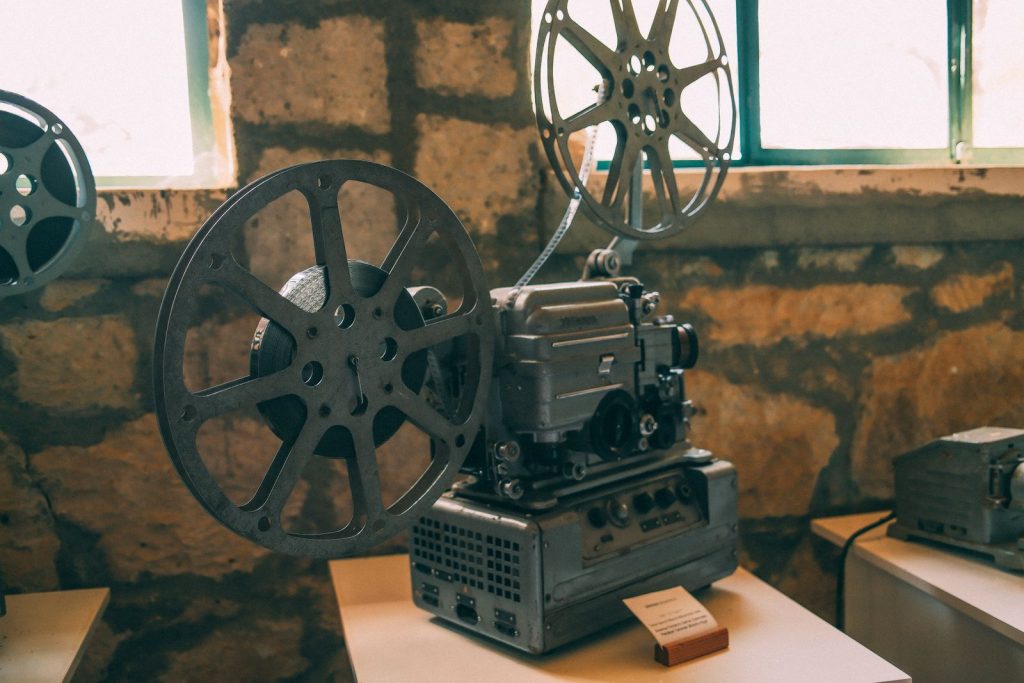
By 1945, the big Hollywood studios owned all or part of only about 17 percent of the movie theaters in the United States. Yet those theaters accounted for roughly 45 percent of the money paid to rent films. That gap explains why the government went after the system, and why the studios fought back for years.
The arrangement that produced it is usually called the studio system. For a few decades, a handful of companies made the movies, rented them to theaters and owned some of the best places to watch them. The stars in the posters were, for the most part, employees.
Three jobs under one roof
The central idea was what business historians call vertical integration. A major studio handled every stage of a film’s life: it produced the picture, distributed it to theaters and, in many cases, owned the theaters where audiences saw it. Eight companies sat at the top, and in 1939 they held about 95 percent of the market between them.
Their origins were quite different:
- Paramount grew from Famous Players, formed in 1912, which merged with the Lasky company in 1916 and took Paramount as its distribution arm
- MGM was founded in 1924 by Marcus Loew, who combined Metro Pictures, Goldwyn Pictures and Louis B. Mayer Pictures
- Warner Bros. was started by the four Warner brothers in 1918 and became known for The Jazz Singer in 1927
- 20th Century Fox came from the 1935 merger of Fox Film and 20th Century Pictures
- RKO formed in late 1928 under RCA’s David Sarnoff and was the weakest of the five
- Universal, formed in 1912 by Carl Laemmle, and Columbia, founded in 1924, had only small theater circuits
- United Artists, created in 1919 by Charlie Chaplin, Douglas Fairbanks, D. W. Griffith and Mary Pickford, worked mainly as a financier and distributor for independent producers
The first five were known as the Big Five, and the last three as the Little Three. In the market-share figures for 1939, MGM led the Big Five with about 22 percent and RKO trailed with about 9 percent, while each of the Little Three held around 7 percent.
Theaters and the block of five
A theater owner who wanted a studio’s best picture often had to take others along with it. This practice, called block booking, sold films in packages that in the 1940s typically held five pictures. A package might include one outstanding film, some A-budget pictures of lesser quality and a few B movies.
A related practice was blind buying, in which exhibitors agreed to rent films they had not yet seen. A 1940 consent decree tried to loosen the grip. It limited the size of a block of features to five films, outlawed blind buying in favor of showings for exhibitors, and created an administration board to watch compliance.
The other half of the double bill
Most moviegoers in the 1930s expected two features for one ticket. The double feature became the dominant way to show movies in the United States by the middle of the decade, and the major studios, after resisting at first, built units to turn out second features.
In 1935, Warner Bros. raised its B production from 12 percent of its output to 50 percent under Bryan Foy, who was nicknamed the Keeper of the Bs. At Fox, Sol M. Wurtzel supervised more than twenty movies a year in the late 1930s. A major-studio feature cost an average of about $375,000 in 1930 and $400,000 in 1940, while the small studios of Poverty Row, such as Republic and Monogram, rarely spent more than $200,000 in the 1940s.
B movies helped a studio’s bottom line because majors rented them at flat fees instead of a share of the box office. Republic’s Westerns, including those starring John Wayne, are classic examples of B product.
Stars on the payroll
By the late 1920s, most prominent American directors and actors had to join the system to keep working. The studios could also take chances. Because they turned out so many pictures, a medium-budget film that failed did not sink the company, since not every release had to be a hit.
The creative staff often stayed in one place. Cedric Gibbons and Herbert Stothart were fixtures at MGM, Alfred Newman worked at 20th Century Fox for twenty years, and Cecil B. DeMille was identified with Paramount. Actors were mostly contract players, and several studios promoted a roster of stars as their own brand.
Over time, the pay structure changed. Stars increasingly took a percentage of profits or gross receipts rather than a flat salary, and their agents gained influence. That shift pointed away from a system that depended on keeping talent bound to a single lot.
The studio heads were powerful figures. Louis B. Mayer ran MGM, Jack L. Warner ran Warner Bros., Adolph Zukor led Paramount, Darryl F. Zanuck ran 20th Century Fox from 1935, and Harry Cohn ran Columbia. Mayer was removed from MGM in 1951 and died in 1957.
The actress who read the fine print
California law did not allow courts to enforce a contract for personal services beyond seven years. Studio lawyers argued that time when a performer was suspended did not count toward those seven years, so seven years of actual work could stretch across a much longer stretch of the calendar.
Olivia de Havilland tested the theory. Backed by the Screen Actors Guild, she sued Warner Bros. on August 23, 1943. Her service had begun on May 5, 1936, and her contract had been renewed six times. On December 8, 1944, the California Court of Appeal ruled in her favor, and in a unanimous opinion it held that seven years meant seven calendar years.
The decision is informally known as the De Havilland Law. It limited the studios’ power to hold actors beyond the legal limit, and de Havilland later won the Best Actress Oscar for To Each His Own (1946).
1939, the high-water mark
Film historians often point to 1939 as the system’s high point, and it is easy to see why. Each of the eight major studios released a film that people still watch:
- The Wizard of Oz from MGM, in the same year as Gone with the Wind, released by MGM from producer David O. Selznick
- Mr. Smith Goes to Washington from Columbia
- Stagecoach, distributed by United Artists
- Destry Rides Again from Universal
- Dark Victory from Warner Bros.
- Beau Geste from Paramount
- Gunga Din from RKO
- Young Mr. Lincoln from 20th Century Fox
That one year proved the value of the machine, with its trained crews, its star roster and its steady supply of work. It also showed the limits. The system turned out polished films, but it left little room for performers or directors who wanted a different path.
The ruling that ended it
The U.S. Department of Justice sued the major studios in 1938, with Paramount as the primary defendant. The trial began on October 8, 1945, and the case eventually reached the Supreme Court.
On May 3, 1948, the Supreme Court ruled 7 to 1 for the government, with Justice William O. Douglas writing the main opinion. The Court held that block booking and studio ownership of theater chains were anti-competitive. It rejected the argument that studios needed block booking to profit from their copyrights.
The ruling forced the studios to sell their theaters. Paramount split into two companies, Paramount Pictures Corporation and United Paramount Theatres, which merged with ABC in 1953. Television, rising costs and falling ticket sales added pressure, and annual feature output dropped from about 700 films in the 1920s to about 300 by 1957. The classic double feature vanished from many American theaters during the 1950s.
A rule with a long life
The 1948 decrees did not fade away quickly. In 1985, the Justice Department said it would stop enforcing them where doing so served the public interest. In 2019 it asked the court to end them entirely.
On August 7, 2020, the court granted that request, with a two-year sunset period for the rules on block booking and circuit dealing. A set of rules that arrived in the age of the Big Five stayed on the books for more than seventy years.