Where Our Favorite Food Expressions Came From
By Ellen Brooks · Published · 8 min read
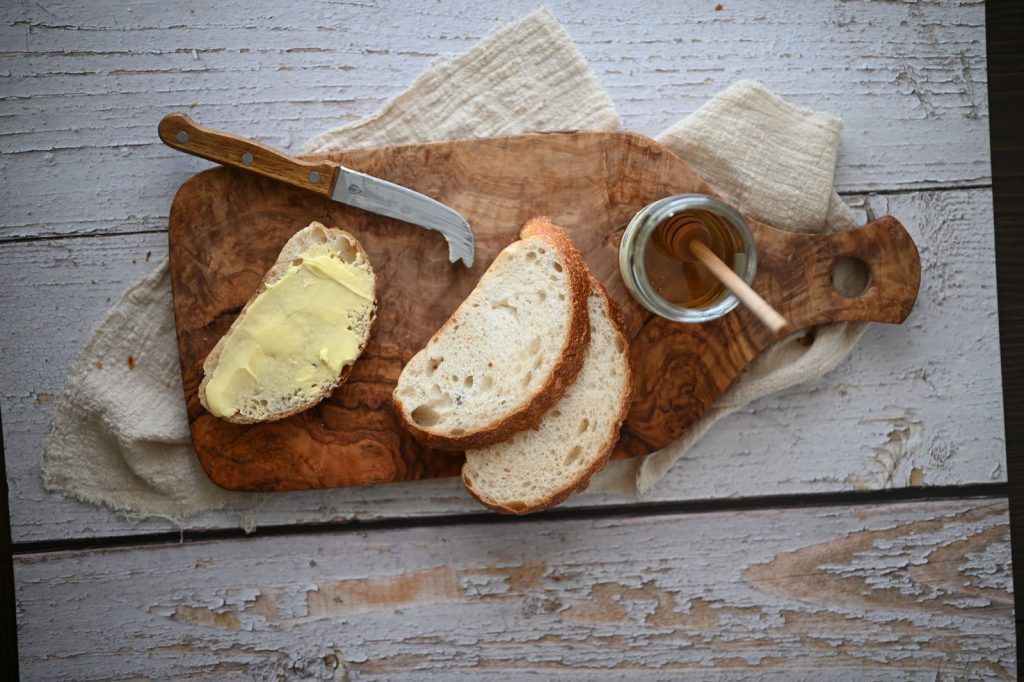
Before a lightweight title fight in 1906, the boxer Joe Gans received a telegram from his mother. According to a newspaper that printed it on September 4, “you bring home the bacon” was the whole instruction. Gans reportedly wired back that he had brought the gravy too.
That story is the earliest solid evidence for one of the best-known food phrases in American English. It is also a good warning about the whole category. Food expressions come with tidy origin tales attached, and many of the tidiest turn out to be unproven. Here are some of the favorites, with what can and cannot be said about each.
Spill the Beans: A Greek Story That Arrives Late
A popular explanation points to ancient Greece, where voters supposedly dropped white beans in a jar for yes and black beans for no. If the person counting spilled the jar before the tally was finished, the secret got out, and the vote was halted. It is a plausible tale and a charming one.
The trouble is the calendar. No printed example of the phrase turns up until the early twentieth century, long after any Greek ballot jar. The paper trail is short:
- 1574: the verb spill meaning “divulge” is already in print, in a book of letters.
- June 1908: a newspaper in Stevens Point, Wisconsin, carries the earliest known “spill the beans,” in a sense closer to spoiling a plan than revealing a secret.
- 1911: an Ohio newspaper uses it in a sense nearer to the modern one.
The word beans itself is unexplained, since English also has phrases such as “spill your guts.” The Greek voting story remains plausible, but plausible is not the same as shown.
Bring Home the Bacon, and the Gravy
The Gans telegram appeared in a New York newspaper in September 1906. A month later, an Oakland paper quoted a boxing writer predicting a win in nearly identical words. Nothing earlier has been found in print, which suggests that the boxing world helped carry the phrase into wide use.
That does not prove Mrs. Gans invented it. It only means the record starts there. Some language researchers treat it as a twentieth-century American coinage.
A medieval explanation is often repeated. It points to the Dunmow Flitch, a custom in Essex where married couples who could prove their devotion won a side of bacon, and Chaucer mentions the custom around 1395. The link to the modern phrase is unproven. Other bacon expressions muddy the waters as well, since “bacon” has meant a person’s body or livelihood since the 1600s, which is why people speak of saving their bacon.
Gans’s reported reply gives a nice excuse to look at gravy. The word arrived in English in the late 1300s from Old French, where it meant a seasoned broth or sauce, and the meat-juice sense grew dominant from the mid-1400s. The expression gravy train is recorded by 1899 and is said to have started as railroad slang for a short run that paid well. By 1910, “gravy” alone could mean money that came easily.
In a Pickle: Shakespeare’s Preserving Jar
To be in a pickle is to be in a quandary, and the phrase has a good paper trail. In The Tempest, written around 1610, Alonso asks a tipsy Trinculo how he came to be in such a pickle. The play is one of the earliest uses of the phrase in print.
The word pickle started out as a spicy sauce served with meat. In the sixteenth century, it came to mean a spiced, salted vinegar used for preserving, and later the preserved vegetables themselves. A Thomas Tusser book from 1573 speaks of an “ill pickle” for barley lying flat in a field.
One reading of the history is that something steeped in brine is stuck in it, and an ill pickle was a bad state to be in. That is an interpretation, not a documented fact. The earliest known English use of pickle appears in the poem Morte Arthure, around 1440.
Eat Humble Pie: The Offal Behind the Apology
To eat humble pie is to be forced to apologize. The dish was real. Umbles were organ meats, the offal of an animal such as a deer, and humble pie was a pie made from them, something like a kidney pie. The word traces back through Old French to the Latin word for loin, and some English dialects added an h to the front.
The literal pie turns up in the diary of Samuel Pepys on July 8, 1663. The earliest figurative use that researchers have found is from a novel in 1804, about 140 years later.
A pun is often given as the explanation. It combines the offal sense of the word with humble in the sense of lowly, which is clever, plausible and undocumented. No source shows that anyone intended the joke at the start.
Another pie-and-pudding word has a similar secret. Around 1300, pudding meant a kind of sausage stuffed with animal entrails. The sweet dish of flour, milk and eggs boiled in a bag is a later arrival, and it had emerged by 1670. Dessert took the name long after the sausage had it.
A Grain of Salt: Pliny, Maybe
Telling someone to take a story with a grain of salt means treating it with doubt. The expression comes from a Latin phrase, cum grano salis. Many writers connect it to the Roman author Pliny the Elder, who described an antidote recipe found after the defeat of King Mithridates, and the recipe calls for adding a grain of salt.
The link is unconfirmed. Pliny never used the idiom, and the Latin word for salt, sal, could also mean wit or common sense. If so, the original idea might have been taking a claim with a bit of common sense rather than a pinch of seasoning.
The earliest English example found so far is from 1609, where an author used the Latin and glossed it as “with a graine of reasonable salt.” The added word reasonable suggests the phrase was still new. By 1647, an English commentary used it without any help.
Salt has another famous story attached. The word salary comes from the Latin salarium, said to have been originally salt money, an allowance given to Roman soldiers to buy salt. That explanation is tradition, not settled fact, and a dictionary treats it that way.
Cool as a Cucumber
Calling someone cool as a cucumber means they are calm under pressure. The phrase is recorded about 1732, and the cucumber itself has been in English since the late 1300s, when it arrived from Old French as cucomer. It replaced an Old English word that meant “earth-apples.”
The comparison may have a physical basis. One dictionary notes that a scientific finding from 1970 supported the old observation: on a warm day, the inside of a field cucumber was about twenty degrees cooler than the air around it. A saying that began as a figure of speech may have been true in the garden too.
Couch Potato: A Phrase With a Known Inventor
Most food idioms have murky beginnings, but this one is different. “Couch potato” is usually credited to Tom Iacino, a friend of the underground cartoonist Robert Armstrong, who is said to have coined it in 1976. Iacino registered it as a trademark in the early 1980s.
The phrase is a joke built on a vegetable. A potato sits still, and so does the person on the sofa. That plain image needs no explanation, which may be why it was so easy to pass along.
It also shows how new food expressions arise: someone makes a joke, and the public repeats it. Older phrases probably started the same way, only without anyone writing down the date.
A Fable About Grapes
The oldest of the food phrases may be sour grapes, which means pretending you never wanted something you could not get. Its source is a short fable, usually credited to the ancient Greek storyteller Aesop, about a fox who cannot reach a bunch of grapes and decides they were sour anyway.
Unlike most of the other phrases, this one has a story that is very likely the real origin, because the idiom is simply the fable’s moral in two words. Nobody needs a pun, a telegram or a Roman recipe to explain it.
That makes it a useful comparison. The simplest explanations are often the best supported, and a dramatic one deserves a careful check before anyone repeats it.