Everyday Words That Started as Brand Names
By Ellen Brooks · Published · 8 min read
In 1921, a federal court in New York decided that “aspirin” belonged to everyone. The case was Bayer Co. v. United Drug Co., and the German company that had coined the name lost the exclusive right to it in the United States. A word that began as a label on a package had become the ordinary name of the drug itself.
That outcome has a name among lawyers, genericide, and it has happened to a surprising list of words. Some were lost in courtrooms, some simply drifted, and a few were coined by the people who built the product. The stories are a good reminder that the words we use without thinking often have an owner somewhere in their past.
How a Name Slips Away
A trademark is supposed to tell shoppers who made something. When the public starts using the name for the product itself, regardless of who made it, the name stops doing that job. Courts then look at how people actually speak, and the company’s wishes carry less weight.
The result can look unfair, since a company may have spent decades building its name. But the legal question is not who invented the word. It is what the word means to ordinary people when they use it.
Dictionaries add another wrinkle. They list the lowercase word as ordinary vocabulary, even when a company still owns the capitalized brand. A single spelling can carry two lives at once.
Companies fight this by treating the name as an adjective and the product as a noun, such as “brand” followed by the ordinary word for the item. They also use capital letters and take out ads asking people not to use the name generically. Those efforts work for some names and fail for others, and often the difference comes down to timing and attention.
Names the Public Took Over
Several famous cases show how the process plays out. Some ended in court rulings, and others are simply remembered as brands that became ordinary words.
- Aspirin (1921). Bayer lost its American trademark rights in the Bayer Co. v. United Drug Co. ruling. One account ties its loss in several countries to the aftermath of World War I.
- Escalator (1950). Otis Elevator Company used the name for its moving staircase, which the public first met at the 1900 Paris Exposition. A 1950 ruling ended the registration, and the company’s own advertisements had used the word as an ordinary term.
- Thermos (1963). The name began with a German company. In 1963, a federal appeals court decided in King-Seeley Thermos Co. v. Aladdin Industries that the word had become generic in the United States.
- Yo-yo (1965). A federal appeals court ruled that the word had become “a part of common speech,” so Donald Duncan no longer held exclusive rights to it.
- Dry ice (1925 and after). The Dry Ice Corporation of America registered the name in 1925 for solid carbon dioxide. Americans came to use it for the product from any source.
- Videotape. Ampex, the company behind the early video recorders, held the name. Like the others, it ended up on the list of brand names that belong to everyone.
- Linoleum (by 1878). The word was coined for a floor covering made with linseed oil, and a trademark lawsuit in the 1870s ended its protection.
Names Built From Latin and Greek
Many of these words sound like science because they were assembled from classical parts. Escalator joins the Latin scala, meaning stairs, to elevator. Linoleum comes from Latin words for flax and oil, which is exactly what the original floor covering contained.
Cellophane was created by the Swiss chemist Jacques Brandenberger, who blended cellulose with the French diaphane, meaning transparent. He invented the film in 1908 and patented the product under that name in 1912. Kerosene was coined by the Canadian geologist Abraham Gesner in the 1850s from the Greek word for wax.
The pattern is easy to see. A company wants a name that sounds modern and technical, and the public decides it is simply the right word for the thing. That is a strong reason names like these slip so easily into everyday speech.
The Zipper and the Boot
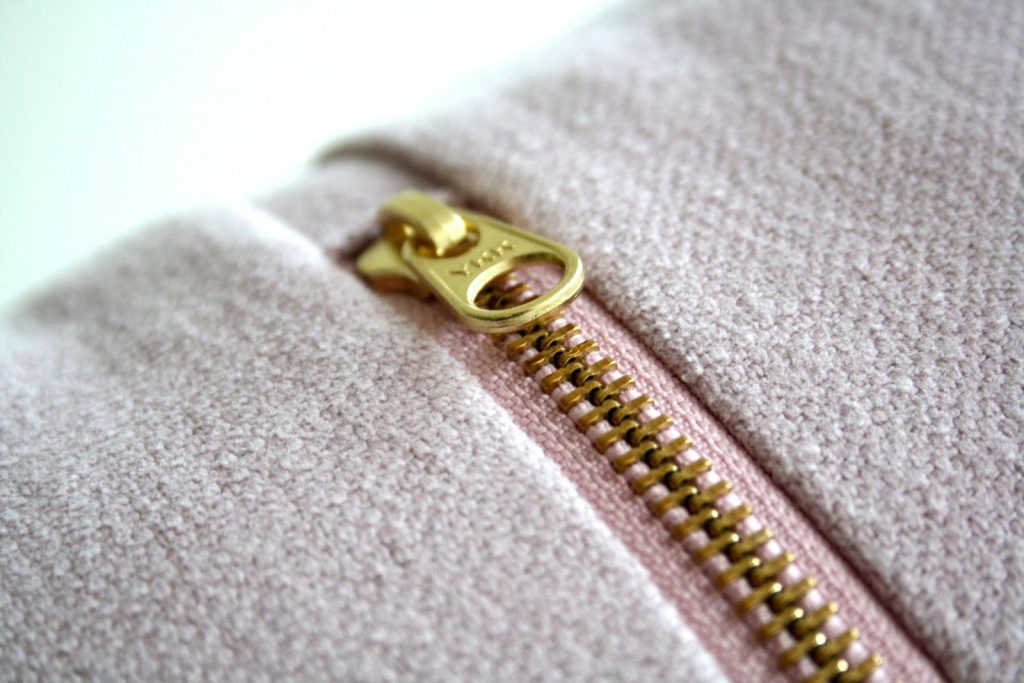
The fastener itself came before the name. Gideon Sundback improved the slide fastener in the early 1910s, and early versions were marketed under less memorable names.
The word zipper arrived in 1923, when Goodrich, the Akron rubber company, used it for an overshoe with a slide fastener. Its president, Bertram G. Work, is credited with coining it.
The name caught on far beyond boots. Within about three years, people were using it for the fastener itself on all kinds of clothing, which is the moment a brand begins to slip. Goodrich was selling overshoes, but the public had found a word for a small piece of hardware.
Nobody asks which company made a zipper. They only want to know if it is stuck.
Names That Traveled With the Product
Not every brand loses a courtroom fight. Some simply become the word people reach for, and the paper trail shows how that happens.
The adhesive bandage is a good example. In 1920, Earle Dickson, an employee of Johnson & Johnson in New Jersey, made a prototype for his wife, Josephine, who kept cutting and burning herself while cooking. It was a strip of gauze set in the middle of surgical tape. The company introduced it as the Band-Aid that June, and the name spread until it described bandages in general.
Kleenex started with a different job. The Cellucotton Company introduced it in 1924 as a way to remove cold cream, using a soft paper that grew out of work on gas mask filters during World War I. By the 1930s, advertising pitched it as a disposable replacement for the cloth handkerchief, and the name followed the new habit. The trademark passed to Kimberly-Clark in 1955.
Velcro came out of a walk in the Alps. After a hunting trip in 1941, the Swiss engineer George de Mestral noticed burrs clinging to his clothes and his dog’s fur, and under a microscope he saw tiny hooks catching on loops. He applied for a Swiss patent in 1951, and it was granted in 1955. The name blends the French words velours, for velvet, and crochet, for hook.
Jell-O began in 1897 in LeRoy, New York, where a carpenter and cough syrup maker named Pearle Wait trademarked the name for a gelatin dessert. In 1899, he sold it to Orator Woodward, whose company made a grain-based drink. Americans came to use the name for gelatin desserts in general.
Two Toys, Two Naming Stories
The flying disc began with a Los Angeles-area inventor named Walter Frederick Morrison, who sold his Pluto Platter design to the Wham-O company on January 23, 1957. That June, Wham-O’s founders adopted the name Frisbee, because college students were already calling the disc by that word. The name is usually linked to the Frisbie Pie Company of Connecticut, whose empty pie tins were said to be tossed around by students, though the details of that story are hard to confirm.
The yo-yo has the most tangled path of all. Pedro Flores, a Filipino immigrant, opened a small manufacturing company in Santa Barbara, California, in 1928. By November 1929, he was running factories in Los Angeles and Hollywood, with about six hundred workers. His toy used a looped string rather than a knotted one, which made many more tricks possible.
Donald Duncan bought the Flores company around 1929 and built a business on the toy. Meanwhile, according to one history, the word itself was registered as a trademark in 1932 by a man in Vancouver, Canada, not by Duncan or Flores. Duncan later relaunched the toy with television advertising in 1962.
Then came the 1965 appeal. The court sided with a rival, Royal Tops, and found that “yo-yo” had become part of common speech. In 1968, the Duncan family sold the company name and trademarks to another firm.
One Word, Many Fates
A word can be free in one country and protected in another. By one count, Aspirin remains a trademark in more than eighty countries, even though the American courts decided long ago that it was generic here. Cellophane is a registered trademark in the United Kingdom, though Americans use the word for many kinds of clear film.
So there is no single rule for how a brand name ends up in the dictionary. A name’s legal life depends on the country, the date and who was paying attention. The same word can be a protected brand in one place and a plain household term in another.