Baseball Phrases Americans Use Every Day
By Ellen Brooks · Published · 8 min read
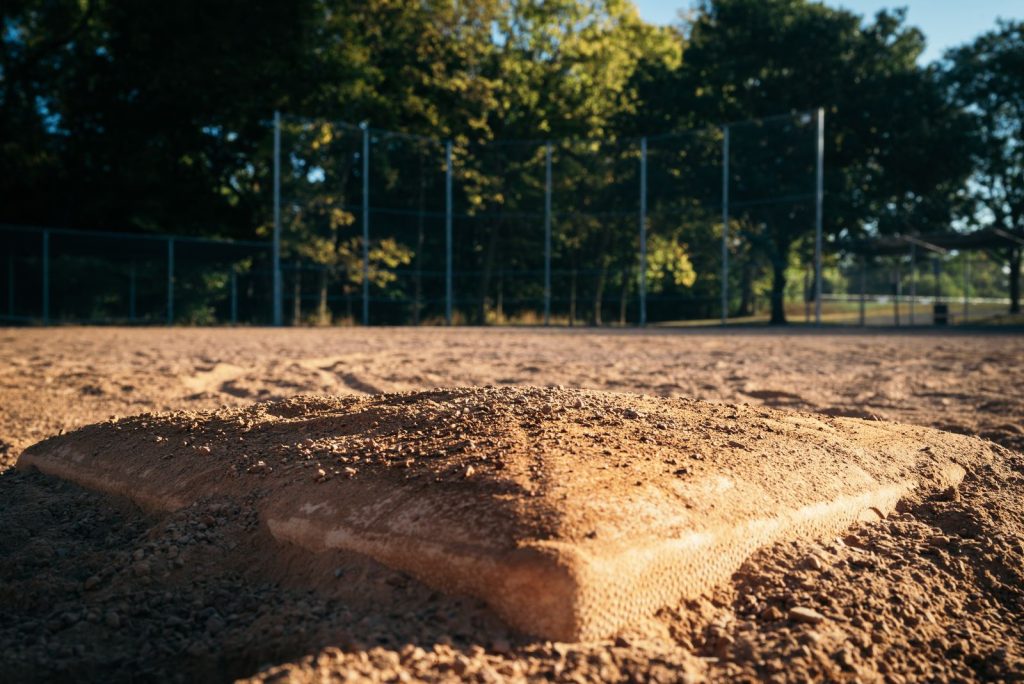
In May 1874, a Chicago Tribune reporter covering a game between the White Stockings and Hartford wrote that “the visitors were put out as fast as they stepped up to the plate.” That is the earliest known example of a phrase Americans now use for everything from job interviews to hard conversations. At the time it meant exactly what it said: a batter had walked up to home plate to take his turn.
Baseball arrived in American speech early and stayed. The sport had a long head start as the national pastime, and its vocabulary was short, vivid and easy to stretch. What follows is a walk through a game, from the ticket window to the bench, with a note on which origin stories hold up and which do not.
Before the First Pitch
Even the word ballpark carries a date. As a name for a baseball stadium, it is recorded by 1893. The figurative sense, “within an acceptable range of approximation,” shows up in dictionaries by 1954, and it gave us the ballpark figure.
The logic is easy to see. You may not know which seat, but you know which park. A ballpark estimate gets you through the gate without promising to find the exact row.
Then there is the rain check. In baseball, it was a ticket handed to fans when a game began but was called off for rain before it became official. By analogy, the phrase spread to stores promising an out-of-stock item at a later date, and then to anyone who postpones an invitation. Each use keeps the same shape: not now, but the offer stands.
At the Plate
Back to the batter’s box. To “step up to the plate” now means to accept responsibility, but the original image was a matter of turn-taking. Players waited their turn, and when it came, someone stepped forward to hit. The figurative sense carries that quiet pressure with it.
A few related phrases come straight from the batting order. A pinch hitter is a substitute sent up at a crucial moment, and the verb “to pinch-hit” means to fill in for someone in a tight spot. To strike out means to fail completely, and a swing and a miss describes an effort that did not come close.
Not every phrase has a documented date, and it would be a mistake to invent one. What can be said is that these expressions are tied to specific moments in the game, which is part of why they stick. The batter’s situation is easy to picture, and that makes the metaphor clear.
The Curveball Argument
When someone says “he threw me a curveball,” they mean a surprise, something that looked like it would go one way and went another. The pitch itself has a disputed history.
The pitcher most often credited with inventing it is Candy Cummings, a star of the 1860s and 1870s. Another man, Fred Goldsmith, claimed that he demonstrated the pitch on August 16, 1870, in Brooklyn. Cummings’s biographer found that claim unconvincing and concluded that the newspaper report supposedly backing it up was probably made up.
So the safest summary is that Cummings is widely credited and the question is still argued. The pitch collected colorful nicknames along the way, including the bender, the hook and the yakker.
Around the Bases
Several of the most common baseball phrases come from the diamond itself. To touch base with someone is to make brief contact, borrowed from the runner who must touch each base in order. To cover your bases means to prepare for every possibility, much as a team positions players to cover the bags.
Off base is a good example of a phrase that flips its meaning. A runner who strays too far from a base is in danger, and the phrase came to describe someone who is mistaken or out of line. The same picture explains a speaker who says that a remark was “way off base.”
None of these expressions needs a famous origin story. The diamond is a small, clear map of risk and safety, and speakers simply borrowed the map. The words kept their baseball logic even as they moved to office hallways and living rooms.
Two Left Fields
Few baseball idioms have attracted more theories than out in left field, meaning confused or far from reality. The earliest known figurative use is from the Boston Herald of October 8, 1919, where the sports editor Burt Whitman described a confused baserunner this way. Dictionaries of American slang date the broader sense to the 1930s.
Two popular stories try to explain why left field. In one, a mental hospital sat beyond the left-field wall at Chicago’s old West Side ballpark, so a player out there seemed to be stationed next to trouble. In the other, left-field seats at Yankee Stadium were considered poor because Babe Ruth played right field.
Neither story holds up well. The Yankee one fails because Ruth joined the team in 1920, a year after the phrase was already in print. The Chicago one is weakened by the fact that the neighboring institution was a general county hospital, and the phrase did not turn up in Chicago papers until decades after the ballpark closed in 1915. No explanation has been proven.
A cousin of the phrase has its own path. Out of left field, meaning unexpected, grew up in the American music business, where a surprise success was a “hit out of left field.” Billboard printed it in 1943, and baseball itself only lent the setting.
Southpaw and the Compass
A left-handed pitcher is called a southpaw, and the word is older than baseball. Before it described pitchers, “south paw” was boxing slang for a punch with the left hand, recorded in 1848. The baseball sense, meaning a left-hander, is recorded in 1885.
A widely repeated tale credits the Chicago humorist Finley Peter Dunne with the baseball sense. Ballparks, the story goes, were laid out so that batters faced east and kept the afternoon sun out of their eyes, which put a left-hander’s throwing arm on the south side of the field. The explanation is repeated everywhere, but it is a common claim, not a confirmed origin.
What is certain is the staying power of the word. Left-handers in other sports, boxing above all, have been called southpaws too.
A Quick Dugout Glossary
Plenty of other phrases come straight from the way the game is played. Their dates are not firmly documented, so here they are by meaning only, with the baseball picture first and the everyday use second.
- On deck. The next batter waits in a marked spot near the plate. Off the field, it means next in line.
- Heavy hitter. A batter who hits with great power. Off the field, it means someone with real influence.
- Bases loaded. Runners stand on first, second and third at once. Off the field, it describes a moment when the risk and the reward are both at their highest.
- Benched. A player waiting on the bench is not in the game. Off the field, to bench someone means to take them out of action.
- Batting a thousand. A batting average of 1.000 means a hit every time. Off the field, it means a perfect run of success.
- Hit it out of the park. The ball clears the fence for a home run. Off the field, it means an outstanding result.
- A whole new ballgame. Something changes and the contest starts over. Off the field, it means the situation is completely different.
Words the Ballpark Borrowed and Lent
Baseball did not invent everything it gave to the language. Grand slam first appears in 1892 in bridge, where it means taking every trick in a hand, and related card games used the term even earlier. The baseball sense, a home run with the bases loaded, is first recorded in 1936.
The word fan went the other way. It is first recorded in American English in 1889, among baseball enthusiasts. Dictionaries think it is probably short for fanatic, and it may have been influenced by “the fancy,” an older name for followers of boxing and other sports.
Then there is rookie, which feels thoroughly baseball but began elsewhere. It is recorded in 1868 as a word for a raw recruit, and its origin is uncertain. Baseball now uses it for a first-year player, but the dictionary trail starts with raw recruits. Plenty of the words in this story began somewhere else and found a home on the diamond.